
Holy Week Wednesday: The Silent Betrayal
Wednesday of Holy Week is the quietest day in the Gospel narrative — and that silence is what makes it so unsettling. Discover how Judas's betrayal for 30 silver coins fulfilled ancient prophecy and set the crucifixion in motion.
Wednesday of Holy Week is the quietest day in the Gospel narrative — and that silence is what makes it so unsettling. While Jesus appears to have rested in Bethany with His disciples, one of those very disciples was making a secret journey into Jerusalem to negotiate the terms of betrayal. The Gospels devote only a handful of verses to this day, but those verses carry enormous theological weight. They reveal how greed, spiritual blindness, and satanic influence converged in a single decision that would set the crucifixion in motion. If you have walked through our studies of Palm Sunday [blocked] and Tuesday's intense confrontations [blocked], Wednesday's silence will feel jarring — and that is precisely the point. The loudest betrayals often happen in whispers.
The Bargain of Judas
"Then one of the twelve, whose name was Judas Iscariot, went to the chief priests and said, 'What will you give me if I deliver him over to you?' And they paid him thirty pieces of silver. And from that moment he sought an opportunity to betray him." — Matthew 26:14-16 (ESV)
Walk through this moment in Scripture
Read the full passage with verse-by-verse commentary, historical context, and parallel accounts — free, no account required.
Matthew's account is devastatingly concise. There is no long deliberation, no dramatic internal monologue — just a transaction. The Greek verb paradidomi (παραδίδωμι) translated "deliver over" is the same word used throughout the New Testament for handing someone into custody. It carries the weight of surrender and transfer of authority. Judas was not merely pointing out where Jesus could be found; he was actively transferring Jesus into the hands of His enemies. The chief priests had been looking for a way to arrest Jesus quietly since Tuesday's public confrontations had made a daytime arrest politically dangerous. Judas solved their problem. For the reader today, this passage forces an uncomfortable question: what are the small compromises that lead us to hand over what we know is sacred?
Satan Enters the Conspiracy
"Then Satan entered into Judas called Iscariot, who was of the number of the twelve. He went away and conferred with the chief priests and officers how he might betray him to them. And they were glad and agreed to give him money. So he consented and sought an opportunity to betray him to them in the absence of a crowd." — Luke 22:3-6 (ESV)
Luke adds a detail that Matthew omits: Satan entered into Judas. The Greek name Satanas (Σατανᾶς), meaning "adversary" or "accuser," appears here not as a metaphor but as a direct spiritual agent. Luke is telling us that the betrayal was not merely a human failure — it was a cosmic event. The spiritual forces opposed to God's redemptive plan found a willing vessel in Judas. Yet Luke also preserves Judas's agency: "he consented" and "he sought an opportunity." The Greek word eukairia (εὐκαιρία) means a "favorable moment" or "opportune time." Judas was not acting impulsively; he was calculating, watching, waiting for the right moment when there would be no crowd to intervene. This intersection of satanic influence and human choice is one of the most theologically dense moments in the Gospels.
If you find this kind of verse-by-verse commentary helpful, BibleCompass provides AI-powered commentary for every passage in the Bible. Try it free →
The Price of a Slave
"Then I said to them, 'If it seems good to you, give me my wages; but if not, keep them.' And they weighed out as my wages thirty pieces of silver. Then the Lord said to me, 'Throw it to the potter' — the lordly price at which I was priced by them. So I took the thirty pieces of silver and threw them into the house of the Lord, to the potter." — Zechariah 11:12-13 (ESV)
The thirty pieces of silver were not an arbitrary sum. Under Mosaic law, thirty shekels of silver was the compensation required for a slave who had been gored by an ox (Exodus 21:32). The prophet Zechariah, writing roughly 500 years before Christ, used this exact amount in a passage about Israel's rejection of their shepherd. The Hebrew word for "lordly" in "the lordly price" is addereth (אַדֶּרֶת), used with bitter irony — it means "magnificent" or "glorious," mocking the pitiful sum assigned to the shepherd's worth. Matthew later records that Judas threw the silver back into the temple and that the priests used it to buy a potter's field (Matthew 27:3-10), fulfilling Zechariah's prophecy in precise detail. The fulfillment is so specific that it serves as one of the strongest evidential arguments for the reliability of the New Testament [blocked].
The Anointing That Judas Resented
"But Judas Iscariot, one of his disciples (he who was about to betray him), said, 'Why was this ointment not sold for three hundred denarii and given to the poor?' He said this, not because he cared about the poor, but because he was a thief, and having charge of the moneybag he used to help himself to what was put into it." — John 12:4-6 (ESV)
John's Gospel provides the backstory that explains Judas's motive. When a woman anointed Jesus with pure nard — the Greek nardos pistike (νάρδος πιστική) meaning "genuine spikenard," a perfume worth nearly a year's wages — Judas objected. His stated reason was concern for the poor, but John exposes the real reason: Judas was a thief who had been stealing from the communal money bag. The word John uses for "help himself" is ebastazen (ἐβάσταζεν), which literally means "to carry away." Judas had been carrying away funds entrusted to him long before he carried Jesus to the cross. His betrayal was not a sudden fall but the culmination of a pattern of small thefts and hidden compromises. This is a sobering reminder that character erosion rarely announces itself — it accumulates in the dark.
A Prophecy from the Psalms
"Even my close friend in whom I trusted, who ate my bread, has lifted his heel against me." — Psalm 41:9 (ESV)
David wrote this psalm about his own experience of betrayal, likely referring to his counselor Ahithophel who sided with Absalom's rebellion. But Jesus explicitly applied this verse to Judas at the Last Supper (John 13:18), identifying Himself as the ultimate fulfillment of David's suffering. The Hebrew phrase ish shelomi (אִישׁ שְׁלוֹמִי) translated "my close friend" literally means "man of my peace" — someone with whom you share a covenant bond of trust. The act of eating bread together in the ancient Near East was a sign of covenant loyalty, making betrayal by a table companion the deepest possible violation of trust. Jesus knew what Judas was planning, and He still broke bread with him. That detail reveals something profound about the character of Christ: He did not withdraw love from the one who was about to destroy Him.
Peter's Later Reflection
"Brothers, the Scripture had to be fulfilled, which the Holy Spirit spoke beforehand by the mouth of David concerning Judas, who became a guide to those who arrested Jesus. For he was numbered among us and was allotted his share in this ministry." — Acts 1:16-17 (ESV)
After the resurrection, Peter addressed the early church about Judas's betrayal with a tone that balances grief and theological clarity. He did not minimize what Judas did — he called him "a guide to those who arrested Jesus." But Peter also placed the betrayal within the framework of divine sovereignty: "the Scripture had to be fulfilled." The Greek word edei (ἔδει) translated "had to" expresses divine necessity, not mere coincidence. Peter was saying that God's redemptive plan was never derailed by Judas's treachery — it was accomplished through it. This is the paradox at the heart of Holy Wednesday: the worst act of human betrayal became the mechanism by which God saved the world. For anyone who has experienced betrayal, this passage offers a startling hope — that God is capable of weaving even the darkest human choices into a story of redemption.
Walking Through the Silence
Holy Wednesday invites a different kind of reflection than the other days of Holy Week. There is no triumphal entry, no temple confrontation, no dramatic miracle. There is only silence on one side and scheming on the other. The practical application for the reader is twofold.
First, examine the small compromises. Judas did not wake up one morning and decide to betray the Son of God. He arrived at that moment through a long series of small thefts, hidden resentments, and unchecked greed. The pattern is instructive: spiritual collapse almost always begins with minor, private failures that go unaddressed. Take time today to honestly assess whether there are areas of your life where small compromises are accumulating. Bring them into the light before they calcify into something irreversible.
Second, rest in the sovereignty of God. Wednesday's silence can feel ominous, but it is also a reminder that God is not anxious. Jesus knew exactly what Judas was doing, and He did not panic. The plan of redemption was not threatened by the betrayal — it was advancing through it. If you are in a season where circumstances feel dark and the people around you are acting in ways that seem destructive, Holy Wednesday reminds you that God's purposes are not subject to human sabotage.
Continue Your Holy Week Study
If you found this verse-by-verse study of Wednesday helpful, BibleCompass provides this kind of AI-powered commentary for every chapter in the Bible — with Greek and Hebrew word studies, historical context, and personal application built into every passage. You can continue walking through Holy Week with our complete 7-day overview [blocked], revisit Tuesday's teaching and confrontation [blocked], or explore any passage that caught your attention today. Start studying with BibleCompass →
Recommended Reading
Deepen your study with these hand-picked books related to this article.
The Case for the Resurrection of Jesus
Gary Habermas & Michael Licona
A comprehensive, accessible resource providing detailed historical evidence for the resurrection of Jesus.

Cold-Case Christianity
J. Warner Wallace
A cold-case detective applies his investigative skills to examine the evidence for the Christian faith, making the case for the reliability of the Gospels. Updated & Expanded Edition.
The Historical Jesus
Gary Habermas
Examines archaeological, textual, and extra-biblical evidence to establish the historicity of Jesus Christ.
As an Amazon Associate, BibleCompass earns from qualifying purchases.
Get the 7-Day Holy Week Devotional
Palm Sunday → Resurrection Sunday — free, delivered to your inbox
Related Articles

Holy Week: Resurrection Sunday — He Is Risen
Resurrection Sunday is the hinge point of all human history. This verse-by-verse study examines the empty tomb accounts across all four Gospels, the Greek behind the resurrection proclamation, and the historical evidence that has convinced skeptics for two thousand years.

Holy Week Friday: Why This Day Changes Everything
Good Friday is the hinge of human history. Through six key passages — from Isaiah's prophecy to the tearing of the temple curtain — this verse-by-verse study explores the Greek behind 'It is finished' and why the cross changes everything.
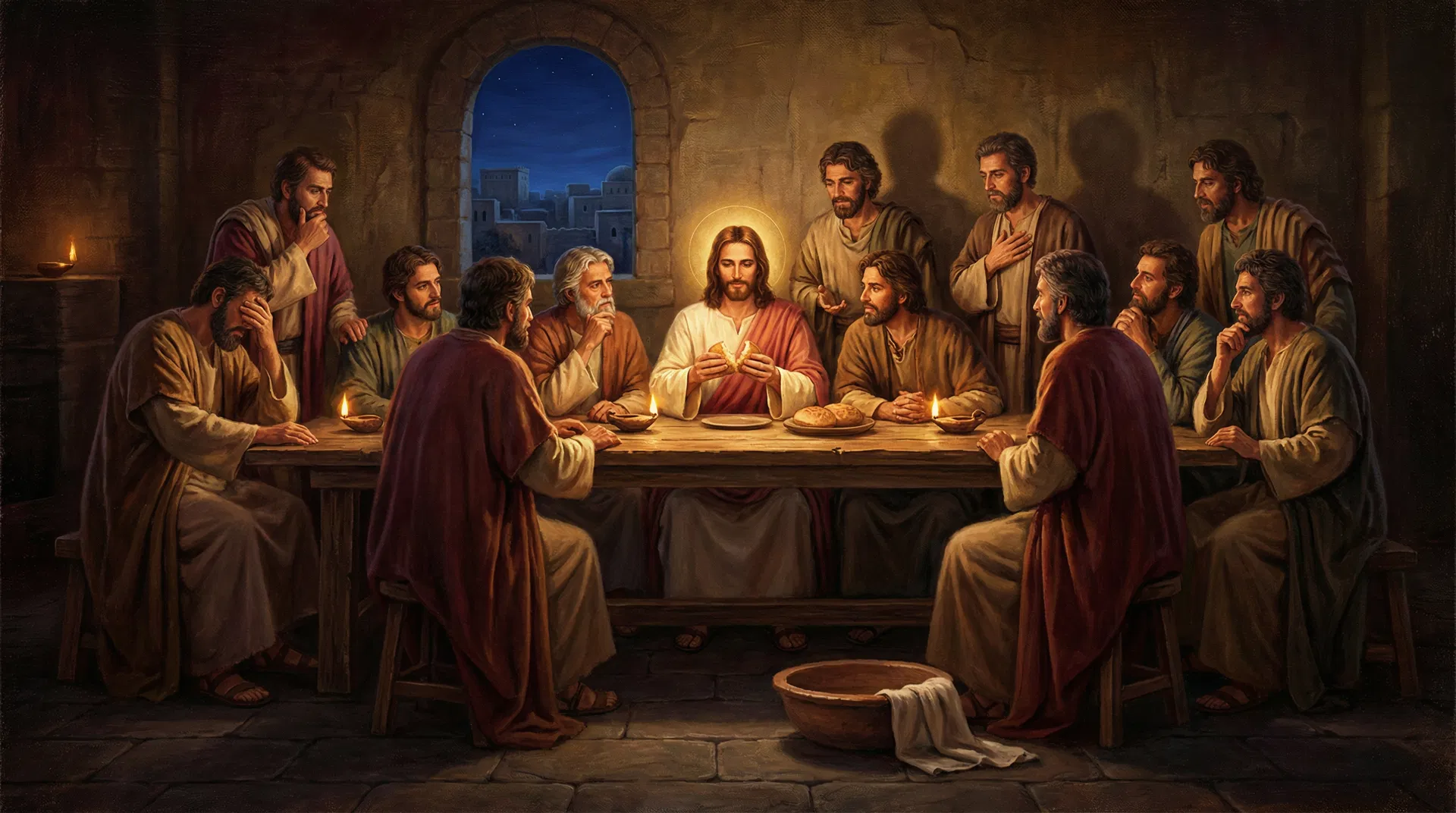
Holy Week Thursday: The Last Supper
Thursday of Holy Week is the most event-dense day in the Passion narrative. Within a single evening, Jesus washed His disciples' feet, instituted communion, delivered His longest recorded prayer, and surrendered Himself in Gethsemane.
Community Discussion
(0)Sign in to join the discussion.
No comments yet. Be the first to share your thoughts!