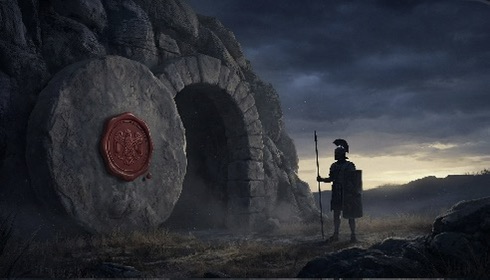
Holy Week: Resurrection Sunday — He Is Risen
Resurrection Sunday is the hinge point of all human history. This verse-by-verse study examines the empty tomb accounts across all four Gospels, the Greek behind the resurrection proclamation, and the historical evidence that has convinced skeptics for two thousand years.
If you are reading this on Easter Sunday — or any day when the weight of death, loss, or unanswered prayer feels heavier than hope — this article is for you. The resurrection of Jesus Christ is not a metaphor for springtime renewal or a symbol of spiritual optimism. It is a claim about something that happened in a garden outside Jerusalem on a specific Sunday morning roughly two thousand years ago. A man who had been publicly executed, confirmed dead by Roman soldiers, and sealed inside a guarded tomb walked out alive. Every other claim of Christianity rests on this single event. If the resurrection is true, it changes everything. If it is not, as the Apostle Paul wrote, "your faith is futile and you are still in your sins" (1 Corinthians 15:17). This Easter Sunday study walks through the resurrection accounts verse by verse, examines the Greek language behind the proclamation, and looks at the historical evidence that has persuaded skeptics and scholars for two millennia.
The Empty Tomb: What the Women Found
"Now after the Sabbath, toward the dawn of the first day of the week, Mary Magdalene and the other Mary went to see the tomb. And behold, there was a great earthquake, for an angel of the Lord descended from heaven and came and rolled back the stone and sat on it." — Matthew 28:1–2 (ESV)
The women who came to the tomb on Sunday morning were not expecting a resurrection. They came to anoint a body with burial spices — a task that presupposes a corpse. This detail is historically significant: it eliminates the possibility that the disciples fabricated the resurrection story, because no one fabricating a resurrection account would make women the primary witnesses. In first-century Jewish and Roman culture, women's testimony carried little legal weight. The Gospel writers included them precisely because that is what actually happened. The Greek word for "dawn" here is epiphoskouse (ἐπιφωσκούσῃ), which literally means "as it was growing light" — a vivid, eyewitness detail that suggests firsthand testimony. The stone was not rolled away to let Jesus out; it was rolled away to let the witnesses in.
The Angel's Proclamation: He Is Not Here
"But the angel said to the women, 'Do not be afraid, for I know that you seek Jesus who was crucified. He is not here, for he has risen, as he said. Come, see the place where he lay.'" — Matthew 28:5–6 (ESV)
The angel's announcement is the most important sentence in the New Testament. The phrase "he has risen" translates the Greek egerthe (ἠγέρθη), a passive aorist form meaning "he was raised" — God the Father raised Jesus from the dead. This is not a metaphor for spiritual renewal or a subjective experience of grieving disciples. It is a passive-voice declaration of a divine act performed on a physical body. The angel then invites the women to verify the claim empirically: "Come, see the place where he lay." The resurrection is not a matter of blind faith; it is an invitation to examine the evidence. The tomb was empty. The burial cloths were left behind. The body was gone. These are the facts all parties — including the Jewish religious authorities who opposed Jesus — agreed upon. Their counter-explanation was not "the tomb is not empty" but "the disciples stole the body" (Matthew 28:13), which concedes the central fact.
"And he said to them, 'Do not be alarmed. You seek Jesus of Nazareth, who was crucified. He has risen; he is not here. See the place where they laid him.'" — Mark 16:6 (ESV)
Mark's account uses the same Greek verb egerthe and adds the specific identification "Jesus of Nazareth" — a historical locator that distinguishes this Jesus from others of the same name. Mark's Gospel is widely considered the earliest written Gospel, likely composed within 30 years of the crucifixion, placing it well within the lifetime of eyewitnesses who could have contradicted false claims. The consistent, independent testimony of multiple Gospel writers — Matthew, Mark, Luke, and John — each writing from different perspectives and audiences, is one of the strongest arguments for the historical reliability of the resurrection accounts. If you find this kind of verse-by-verse Bible study [blocked] helpful, you are engaging with the text the way the early church did — not as mythology, but as history.
If you find this kind of verse-by-verse commentary helpful, BibleCompass provides AI-powered commentary for every passage in the Bible. Try it free →
The Risen Jesus Appears: Mary at the Tomb
"Jesus said to her, 'Mary.' She turned and said to him in Aramaic, 'Rabboni!' (which means Teacher)." — John 20:16 (ESV)
John's account of Mary Magdalene's encounter with the risen Jesus is one of the most intimate and theologically rich moments in all of Scripture. Mary had been weeping at the tomb, assuming the body had been stolen. When Jesus appeared, she did not recognize Him — until He spoke her name. The Greek word Rabboni (Ῥαββουνί) is an Aramaic honorific meaning "my great teacher" or "my master," a term of deep personal reverence. This moment illustrates a truth that runs throughout the resurrection accounts: the risen Jesus was recognizable as the same person who had died, yet somehow different — able to appear and disappear, to pass through locked doors, yet also to eat fish and be touched. The resurrection body was physical but glorified. This is not a ghost story. It is the first instance of what Paul would later call the "spiritual body" (1 Corinthians 15:44) — the prototype of the resurrection that awaits all who are in Christ.
The Appearance to the Disciples: Peace Be With You
"On the evening of that day, the first day of the week, the doors being locked for fear of the Jews, Jesus came and stood among them and said to them, 'Peace be with you.' When he had said this, he showed them his hands and his side. Then the disciples were glad when they saw the Lord." — John 20:19–20 (ESV)
The disciples were hiding behind locked doors, paralyzed by fear. They had watched their teacher die. Their hope had been buried with Him. Then Jesus appeared — not as a vision or a hallucination, but physically present enough to show the wounds in His hands and side. The Greek word for "glad" is echaresan (ἐχάρησαν), from chara — the same root as the word for grace (charis). Joy and grace share the same origin in Greek, and that connection is not accidental. The resurrection does not merely reverse the crucifixion; it transforms it into the foundation of an unshakeable joy. The wounds Jesus showed were not healed away — they were retained as permanent evidence of what He had done. As the reliability of the New Testament [blocked] has been confirmed by manuscript evidence, so the resurrection appearances are confirmed by the transformation of these same terrified disciples into men who would die rather than recant their testimony.
The Historical Case: More Than 500 Witnesses
"Then he appeared to more than five hundred brothers at one time, most of whom are still alive, though some have fallen asleep." — 1 Corinthians 15:6 (ESV)
The Apostle Paul wrote these words approximately AD 55 — within 25 years of the crucifixion. He listed a sequence of resurrection appearances: to Peter, to the twelve disciples, to five hundred people at once, to James, and finally to Paul himself. The phrase "most of whom are still alive" is a remarkable statement. Paul was essentially inviting his readers to go and verify the claim by interviewing the eyewitnesses themselves. This is not the language of legend or mythology; it is the language of a man confident in the verifiability of what he is saying. Historian Gary Habermas, who has spent decades cataloging the historical evidence for the resurrection, identifies this passage as one of the earliest and most reliable pieces of evidence in the entire New Testament — a creedal formula that Paul likely received within a few years of the crucifixion itself. The resurrection is the most attested event in the ancient world.
Application: Living in the Light of the Empty Tomb
The resurrection of Jesus is not merely a historical fact to be believed — it is a present reality to be lived. The Apostle Paul draws out the practical implications in Romans 6:4: "We were buried therefore with him by baptism into death, in order that, just as Christ was raised from the dead by the glory of the Father, we too might walk in newness of life." The same power that raised Jesus from the dead is available to every believer today. This is not motivational language. It is a theological claim about the indwelling Holy Spirit who raised Christ (Romans 8:11) and who now lives in you.
Here are two ways to live in the reality of the resurrection this Easter Sunday. First, read the resurrection accounts in all four Gospels today — Matthew 28, Mark 16, Luke 24, and John 20. Read them slowly, as if for the first time. Notice the details that differ slightly between accounts (the number of women, the exact words of the angels) — these are the marks of independent eyewitness testimony, not fabrication. Coordinated stories match perfectly; real witnesses remember things differently. Second, write down one fear or doubt you are carrying and bring it to the empty tomb. The resurrection is God's answer to every form of death — physical, relational, spiritual, vocational. Whatever feels sealed and finished in your life, the God who rolled away the stone is still at work.
A structured reading plan through the Gospels [blocked] is one of the best ways to build a daily encounter with the risen Jesus beyond Easter Sunday.
The Resurrection Changes Everything
If you found these commentaries on the resurrection helpful, BibleCompass provides this kind of verse-by-verse AI commentary for every passage in the Bible — including the complete resurrection accounts in Matthew, Mark, Luke, and John. You can explore the Greek behind every verse, trace the cross-references that connect the resurrection to Old Testament prophecy, and build a daily reading habit that keeps the reality of Easter alive all year long — all completely free. Try BibleCompass today →
This article is the final entry in the Holy Week series. To read the complete journey from Palm Sunday to Resurrection Sunday, start with Holy Week: The Most Powerful 7 Days in Human History [blocked].
Recommended Reading
Deepen your study with these hand-picked books related to this article.
The Case for the Resurrection of Jesus
Gary Habermas & Michael Licona
A comprehensive, accessible resource providing detailed historical evidence for the resurrection of Jesus.
Cold-Case Christianity
J. Warner Wallace
A cold-case detective applies his investigative skills to examine the evidence for the Christian faith, making the case for the reliability of the Gospels. Updated & Expanded Edition.
The Historical Jesus
Gary Habermas
Examines archaeological, textual, and extra-biblical evidence to establish the historicity of Jesus Christ.
As an Amazon Associate, BibleCompass earns from qualifying purchases.
Get the 7-Day Holy Week Devotional
Palm Sunday → Resurrection Sunday — free, delivered to your inbox
Related Articles
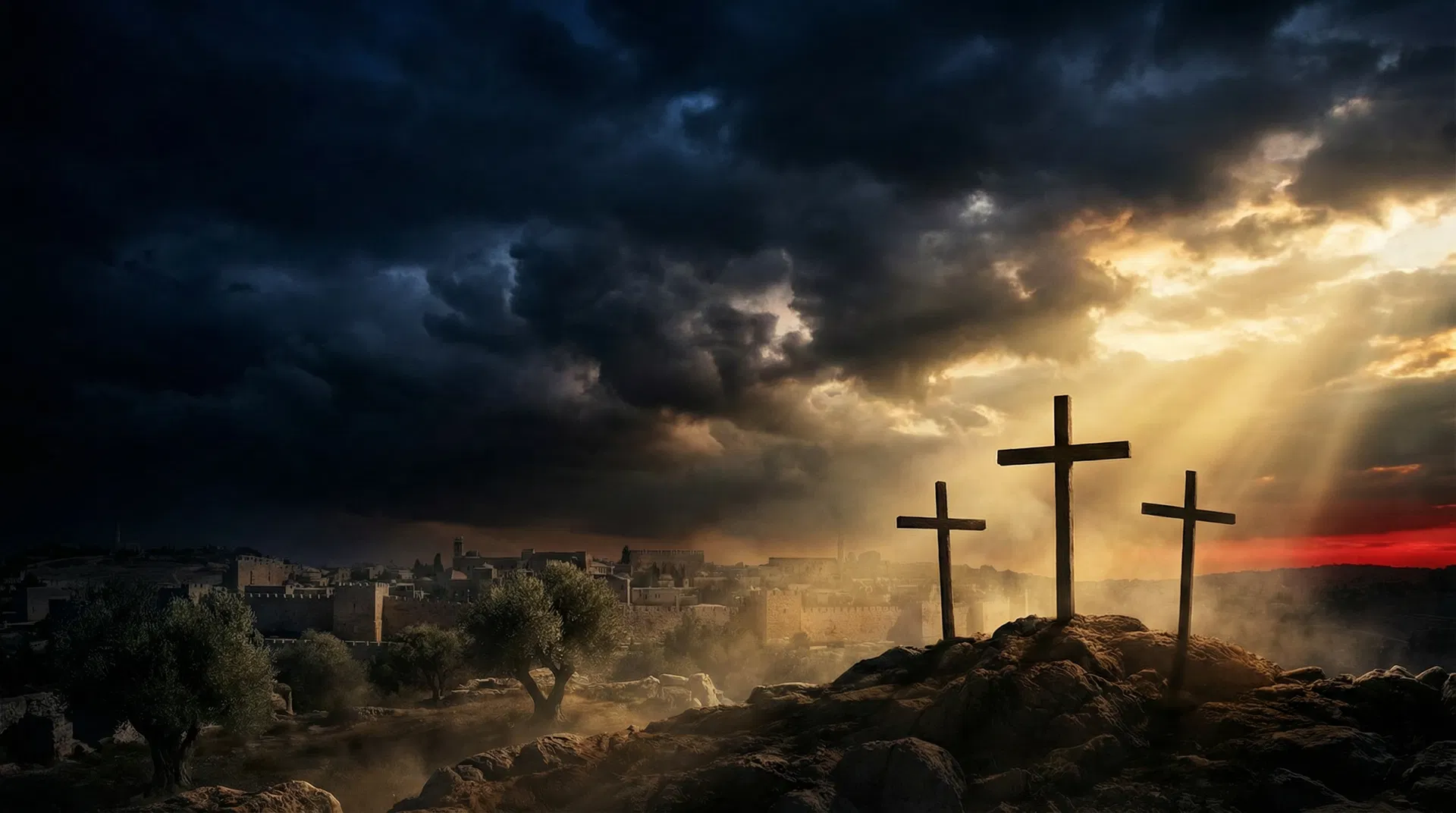
Holy Week: The Most Powerful 7 Days in Human History
From the shouts of Hosanna on Palm Sunday to the empty tomb on Resurrection morning, Holy Week contains the most consequential events in human history. This day-by-day study walks through the final week of Jesus's earthly ministry with original Greek insights and historical context.
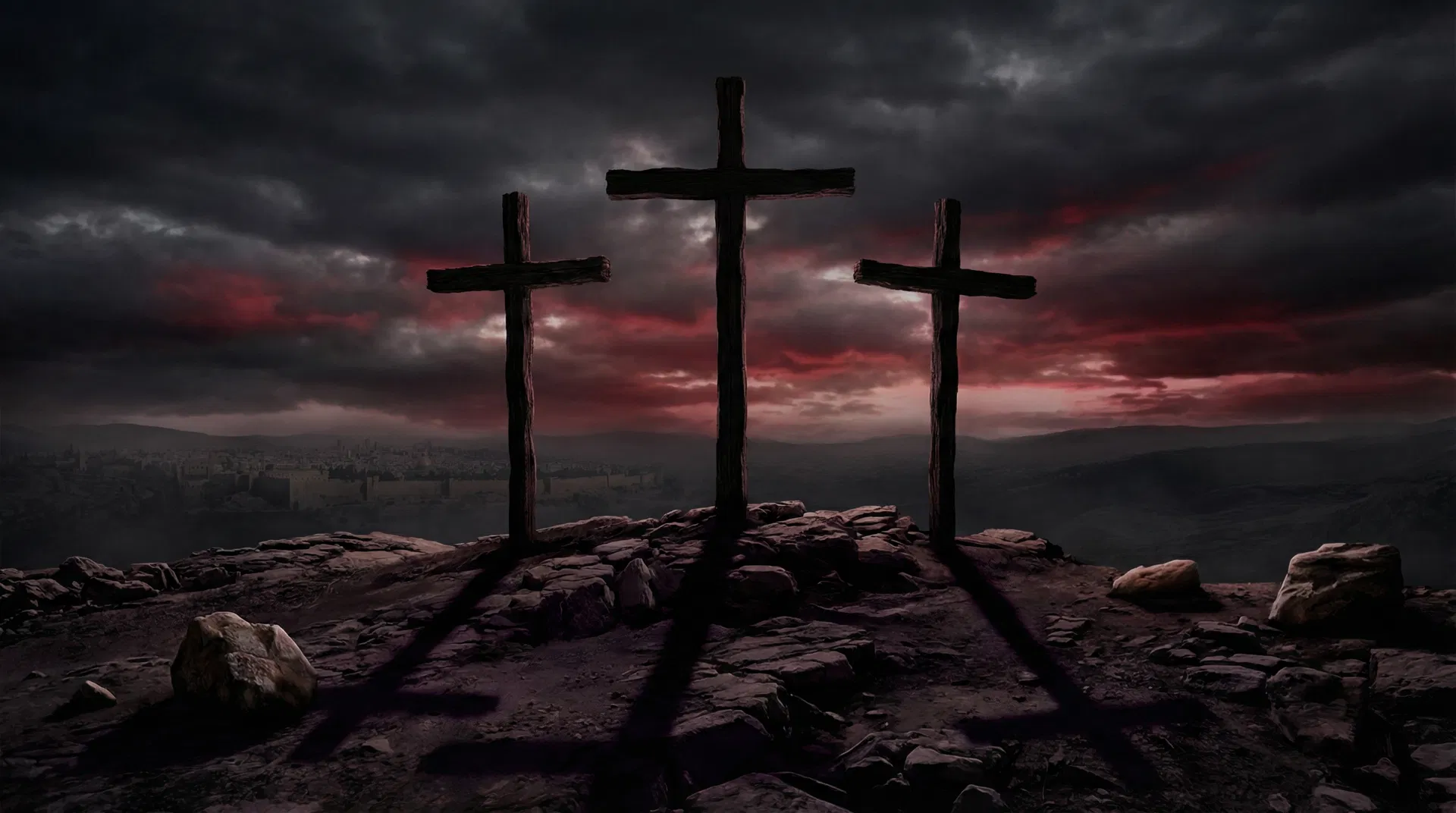
Holy Week Friday: Why This Day Changes Everything
Good Friday is the hinge of human history. Through six key passages — from Isaiah's prophecy to the tearing of the temple curtain — this verse-by-verse study explores the Greek behind 'It is finished' and why the cross changes everything.
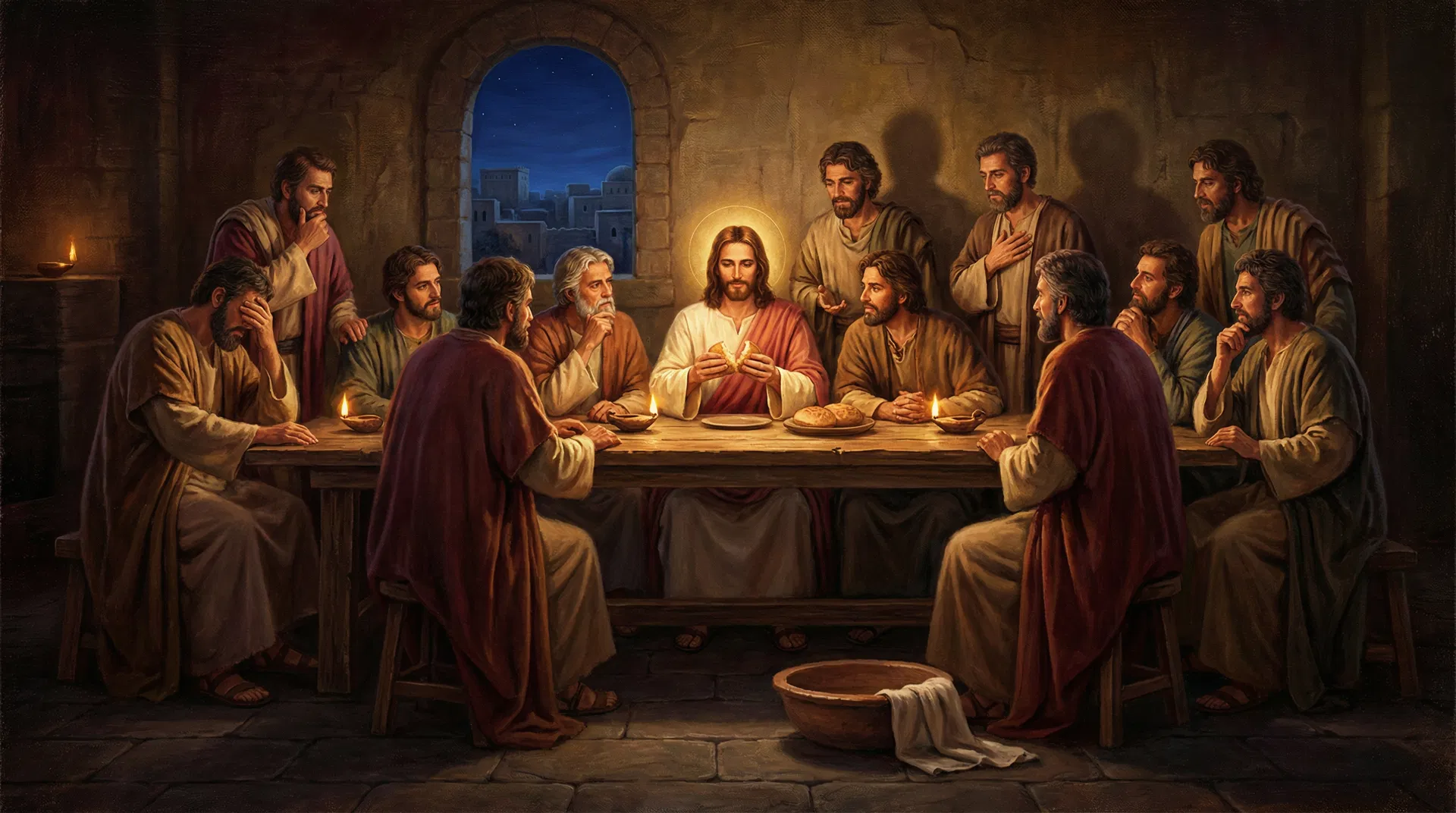
Holy Week Thursday: The Last Supper
Thursday of Holy Week is the most event-dense day in the Passion narrative. Within a single evening, Jesus washed His disciples' feet, instituted communion, delivered His longest recorded prayer, and surrendered Himself in Gethsemane.
Community Discussion
(0)Sign in to join the discussion.
No comments yet. Be the first to share your thoughts!