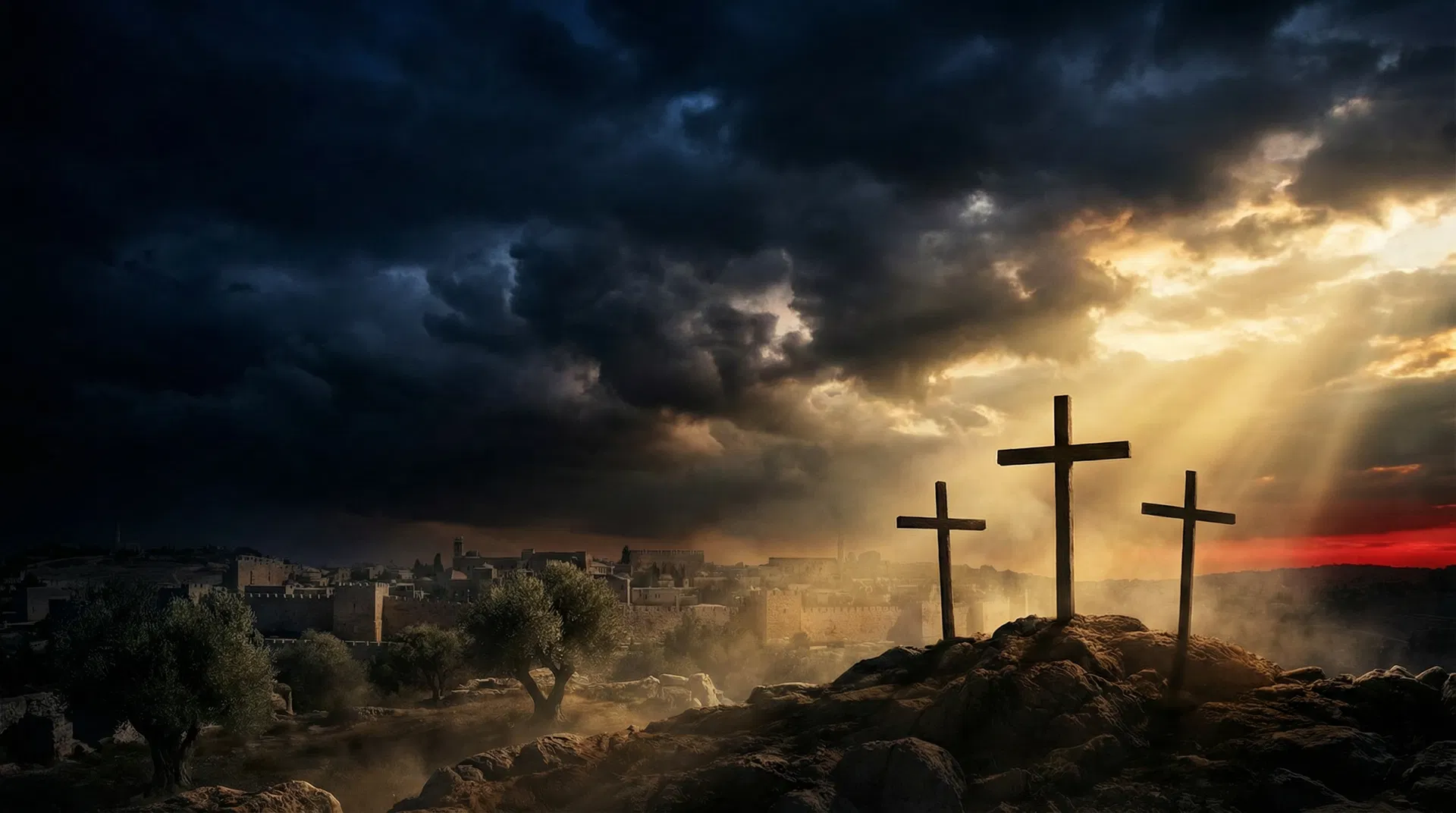
Holy Week: The Most Powerful 7 Days in Human History
From the shouts of Hosanna on Palm Sunday to the empty tomb on Resurrection morning, Holy Week contains the most consequential events in human history. This day-by-day study walks through the final week of Jesus's earthly ministry with original Greek insights and historical context.
The week between Palm Sunday and Resurrection Sunday is the most consequential stretch of days in all of human history. In just seven days, the trajectory of eternity was altered. A king entered Jerusalem on a donkey, overturned the tables of corruption, shared a final meal with His closest friends, endured betrayal and abandonment, was crucified under Roman authority, and then — on the third day — walked out of a sealed tomb alive. Every major world religion acknowledges Jesus of Nazareth as a historical figure, but Christianity stands or falls on what happened during this single week. If you have ever wondered why Christians call the Friday of Jesus's death "Good Friday," or why the resurrection matters beyond a holiday tradition, this day-by-day study will walk you through Holy Week with the kind of historical depth and original language insight that brings these ancient events to life.
Palm Sunday: The Triumphal Entry
"And the crowds that went before him and that followed him were shouting, 'Hosanna to the Son of David! Blessed is he who comes in the name of the Lord! Hosanna in the highest!'" — Matthew 21:9 (ESV)
Jesus entered Jerusalem riding on a young donkey, deliberately fulfilling the prophecy of Zechariah 9:9, which described Israel's king coming "humble and mounted on a donkey." The crowds spread their cloaks and palm branches on the road — a gesture reserved for royalty. The word Hosanna comes from the Hebrew hoshia na (הושיעה נא), which means "save us, we pray." It was originally a cry for deliverance from Psalm 118:25, but by the first century it had become a shout of acclamation for the Messiah. The title "Son of David" was an explicitly messianic designation. The crowd was publicly declaring Jesus to be the long-awaited King of Israel. The irony is staggering: within five days, many of these same voices would cry "Crucify Him." The Roman governor Pontius Pilate and the Jewish religious leaders both understood the political implications of this procession. Jesus was making a public, prophetic claim to the throne of David — and He was doing it on God's timetable, not theirs.
Monday: Cleansing the Temple
"And he entered the temple and began to drive out those who sold and those who bought in the temple, and he overturned the tables of the money-changers and the seats of those who sold pigeons. And he was teaching them and saying to them, 'Is it not written, My house shall be called a house of prayer for all the nations? But you have made it a den of robbers.'" — Mark 11:15-17 (ESV)
The temple cleansing was not an outburst of uncontrolled anger. Mark's Gospel tells us that Jesus entered the temple the evening before, "looked around at everything," and then left (Mark 11:11). He returned the next day with deliberate purpose. The Court of the Gentiles — the only area where non-Jews could worship — had been turned into a marketplace. Money-changers charged exorbitant exchange rates to convert Roman coins (which bore Caesar's image) into temple currency, and dove sellers exploited the poor who could only afford the least expensive sacrifice. The Greek word for "robbers" is lestes (λῃστής), the same word used to describe the criminals crucified alongside Jesus. This was not petty commerce; it was systemic exploitation wrapped in religious respectability. By cleansing the temple, Jesus was asserting His authority over the house of God and exposing the corruption of the religious establishment — an act that sealed the determination of the chief priests to destroy Him.
Tuesday: Teaching and Confrontation
"And he said to him, 'You shall love the Lord your God with all your heart and with all your soul and with all your mind. This is the great and first commandment. And a second is like it: You shall love your neighbor as yourself.'" — Matthew 22:37-39 (ESV)
Tuesday was the longest and most public day of Holy Week. Jesus taught in the temple courts while the Pharisees, Sadducees, and Herodians took turns trying to trap Him with loaded questions about taxes, resurrection, and the law. When asked to identify the greatest commandment, Jesus quoted Deuteronomy 6:5 and Leviticus 19:18, weaving the entire Old Testament into two commands. The Greek word for "love" in both commands is agapao (ἀγαπάω) — not emotional affection but a deliberate, self-giving commitment. Jesus was not merely answering a theological quiz; He was summarizing the entire purpose of Scripture. If you find this kind of verse-by-verse Bible study [blocked] helpful, you are already engaging with the text the way Jesus intended — not as a collection of rules, but as a unified story about love.
If you find this kind of verse-by-verse commentary helpful, BibleCompass provides AI-powered commentary for every passage in the Bible. Try it free →
Wednesday: The Betrayal Agreement
"Then one of the twelve, whose name was Judas Iscariot, went to the chief priests and said, 'What will you give me if I deliver him over to you?' And they paid him thirty pieces of silver. And from that moment he sought an opportunity to betray him." — Matthew 26:14-16 (ESV)
The Gospels are largely silent about Wednesday, but Matthew records the pivotal moment when Judas Iscariot approached the chief priests to negotiate the betrayal. The price — thirty pieces of silver — was the exact amount specified in Exodus 21:32 as compensation for a slave killed by an ox. The prophet Zechariah had foretold this precise sum centuries earlier (Zechariah 11:12-13). The Greek word for "deliver" is paradidomi (παραδίδωμι), which means to hand over or surrender. It is the same word Paul later used to describe God "delivering up" His own Son for us all (Romans 8:32). The tragic irony is unmistakable: what Judas did for greed, God had purposed for redemption. Judas's betrayal was a free moral choice, yet it fulfilled prophecy written hundreds of years before his birth — a tension that underscores the sovereignty of God working through human decisions.
Thursday: The Last Supper and Gethsemane
"And he took bread, and when he had given thanks, he broke it and gave it to them, saying, 'This is my body, which is given for you. Do this in remembrance of me.' And likewise the cup after they had eaten, saying, 'This cup that is poured out for you is the new covenant in my blood.'" — Luke 22:19-20 (ESV)
On Thursday evening, Jesus gathered His disciples in an upper room in Jerusalem to celebrate the Passover meal — the annual feast commemorating Israel's deliverance from slavery in Egypt. But Jesus transformed the ancient ritual into something entirely new. The bread, which represented the haste of Israel's departure, now represented His body about to be broken. The cup, which recalled the blood of the Passover lamb painted on doorposts in Exodus 12, now represented His blood establishing a "new covenant" — the Greek kaine diatheke (καινὴ διαθήκη), the fulfillment of Jeremiah's prophecy (Jeremiah 31:31-34) that God would write His law on human hearts rather than stone tablets. After the meal, Jesus led His disciples to the Garden of Gethsemane on the Mount of Olives, where He prayed in such agony that Luke, the physician, records His sweat falling "like great drops of blood" (Luke 22:44) — a medical condition known as hematidrosis, caused by extreme stress. The reliability of these Gospel accounts [blocked] has been confirmed by manuscript evidence and historical scholarship spanning two millennia.
Good Friday: The Crucifixion
"When Jesus had received the sour wine, he said, 'It is finished,' and he bowed his head and gave up his spirit." — John 19:30 (ESV)
The crucifixion of Jesus is the most documented execution in the ancient world. After a series of illegal trials before the Sanhedrin, Herod Antipas, and Pontius Pilate, Jesus was scourged with a Roman flagrum — a whip embedded with bone and metal — and forced to carry His cross to Golgotha, "the place of the skull." Roman crucifixion was designed to maximize suffering and public humiliation. The victim's wrists and feet were nailed to the wooden beams, and death came slowly through a combination of shock, blood loss, and asphyxiation as the body's weight made breathing increasingly impossible.
Jesus's final declaration — "It is finished" — is a single word in Greek: tetelestai (τετέλεσται). This is not the cry of a defeated man. It is the perfect tense of teleo, meaning "to bring to completion, to accomplish fully." Archaeologists have found this exact word written on ancient receipts and tax documents, meaning "paid in full." On the cross, Jesus was declaring that the debt of human sin — every act of rebellion, every broken commandment, every failure to love God and neighbor — had been paid in full. The curtain of the temple, which separated the Holy of Holies from the rest of the temple, was torn from top to bottom (Matthew 27:51), signifying that access to God was no longer restricted to priests and rituals. The barrier between God and humanity was removed.
Saturday: The Silent Day
The Gospels say almost nothing about Saturday. Jesus's body lay in the tomb of Joseph of Arimathea, sealed with a large stone and guarded by Roman soldiers at the request of the chief priests (Matthew 27:62-66). For the disciples, this was a day of devastating silence. Their teacher was dead. Their hopes were shattered. They did not yet understand that the silence of Saturday was the necessary pause between the greatest tragedy and the greatest triumph the world would ever know. The guards at the tomb are a critical historical detail — they eliminate the possibility that the disciples stole the body, which was the earliest counter-explanation offered by the Jewish authorities (Matthew 28:13). As scholar Gary Habermas has documented, even skeptical historians acknowledge that the tomb was empty on Sunday morning; the debate is only about why.
Resurrection Sunday: The Empty Tomb
"But the angel said to the women, 'Do not be afraid, for I know that you seek Jesus who was crucified. He is not here, for he has risen, as he said. Come, see the place where he lay.'" — Matthew 28:5-6 (ESV)
Early on Sunday morning, women went to the tomb to anoint Jesus's body with burial spices — a detail that confirms they had no expectation of a resurrection. They found the stone rolled away and the tomb empty. The angel's words are precise: "He has risen" translates the Greek egerthe (ἠγέρθη), a passive form meaning "He was raised" — God the Father raised Jesus from the dead. This is not a metaphor for spiritual renewal or a subjective experience of the disciples. It is a claim about a physical, bodily resurrection that can be investigated historically. The Apostle Paul, writing within 20 years of the event, listed over 500 eyewitnesses who saw the risen Jesus, most of whom were still alive and could be questioned (1 Corinthians 15:6). The resurrection is the foundation of the Christian faith. As Paul wrote, "If Christ has not been raised, your faith is futile and you are still in your sins" (1 Corinthians 15:17). But if He has been raised, then everything He said and did during Holy Week — every teaching, every prophecy, every promise — is validated by the highest possible authority: victory over death itself. The armor of God [blocked] that Paul later described is armor provided by a risen, living Savior.
How to Walk Through Holy Week Today
Holy Week is not merely a historical event to study — it is an invitation to respond. This week, set aside time each day to read the Gospel accounts for yourself. On Sunday, read Matthew 21:1-11. On Monday, read Mark 11:12-19. On Tuesday, read Matthew 22-23. On Wednesday, read Matthew 26:1-16. On Thursday, read Luke 22:7-46. On Friday, read John 18-19. On Saturday, sit in the silence and reflect on what it cost. And on Resurrection Sunday, read Matthew 28 and let the reality of the empty tomb reshape how you see everything else.
Write one verse from each day on a card or in a journal. Pray through it. Ask God to make the events of Holy Week personal — not just something that happened two thousand years ago, but something that changes how you live today.
Explore Holy Week with Verse-by-Verse Commentary
If you found this day-by-day walk through Holy Week helpful, BibleCompass provides this kind of verse-by-verse AI commentary for every passage in the Bible — including the complete Gospel accounts of Matthew, Mark, Luke, and John. You can follow a personalized reading plan, explore cross-references that connect the Gospels to Old Testament prophecy, and build a daily study habit — all completely free. Try BibleCompass today →
Recommended Reading
Deepen your study with these hand-picked books related to this article.
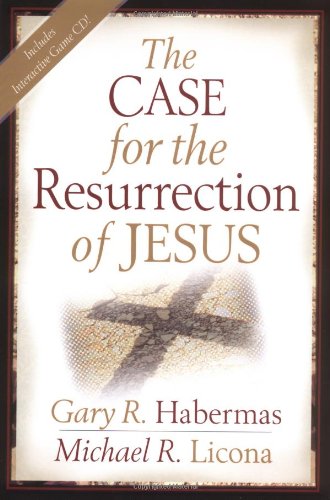
The Case for the Resurrection of Jesus
Gary Habermas & Michael Licona
A comprehensive, accessible resource providing detailed historical evidence for the resurrection of Jesus.
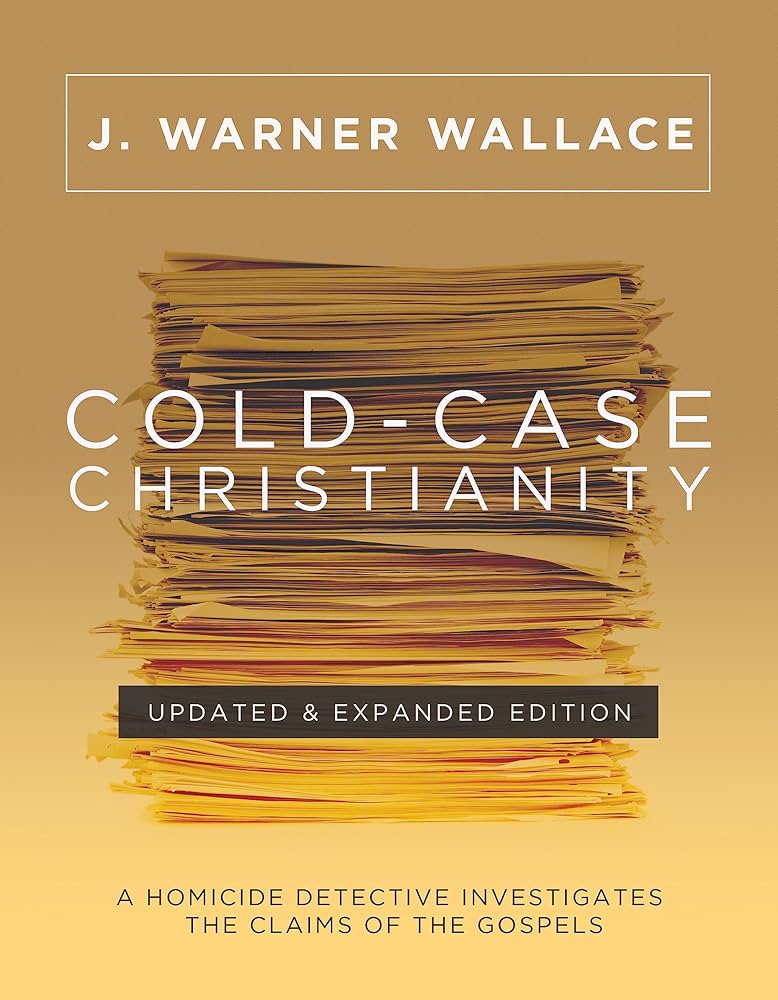
Cold-Case Christianity
J. Warner Wallace
A cold-case detective applies his investigative skills to examine the evidence for the Christian faith, making the case for the reliability of the Gospels. Updated & Expanded Edition.
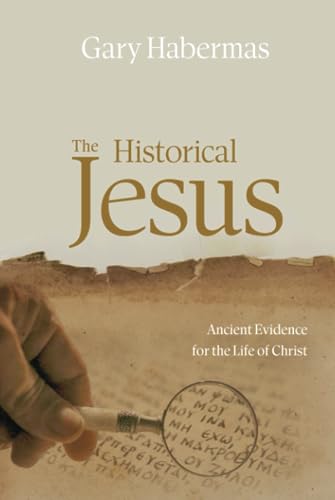
The Historical Jesus
Gary Habermas
Examines archaeological, textual, and extra-biblical evidence to establish the historicity of Jesus Christ.
As an Amazon Associate, BibleCompass earns from qualifying purchases.
Get the 7-Day Holy Week Devotional
Palm Sunday → Resurrection Sunday — free, delivered to your inbox
Related Articles
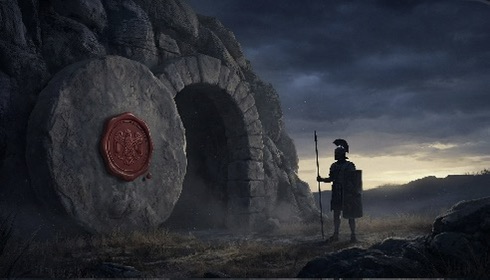
Holy Week: Resurrection Sunday — He Is Risen
Resurrection Sunday is the hinge point of all human history. This verse-by-verse study examines the empty tomb accounts across all four Gospels, the Greek behind the resurrection proclamation, and the historical evidence that has convinced skeptics for two thousand years.
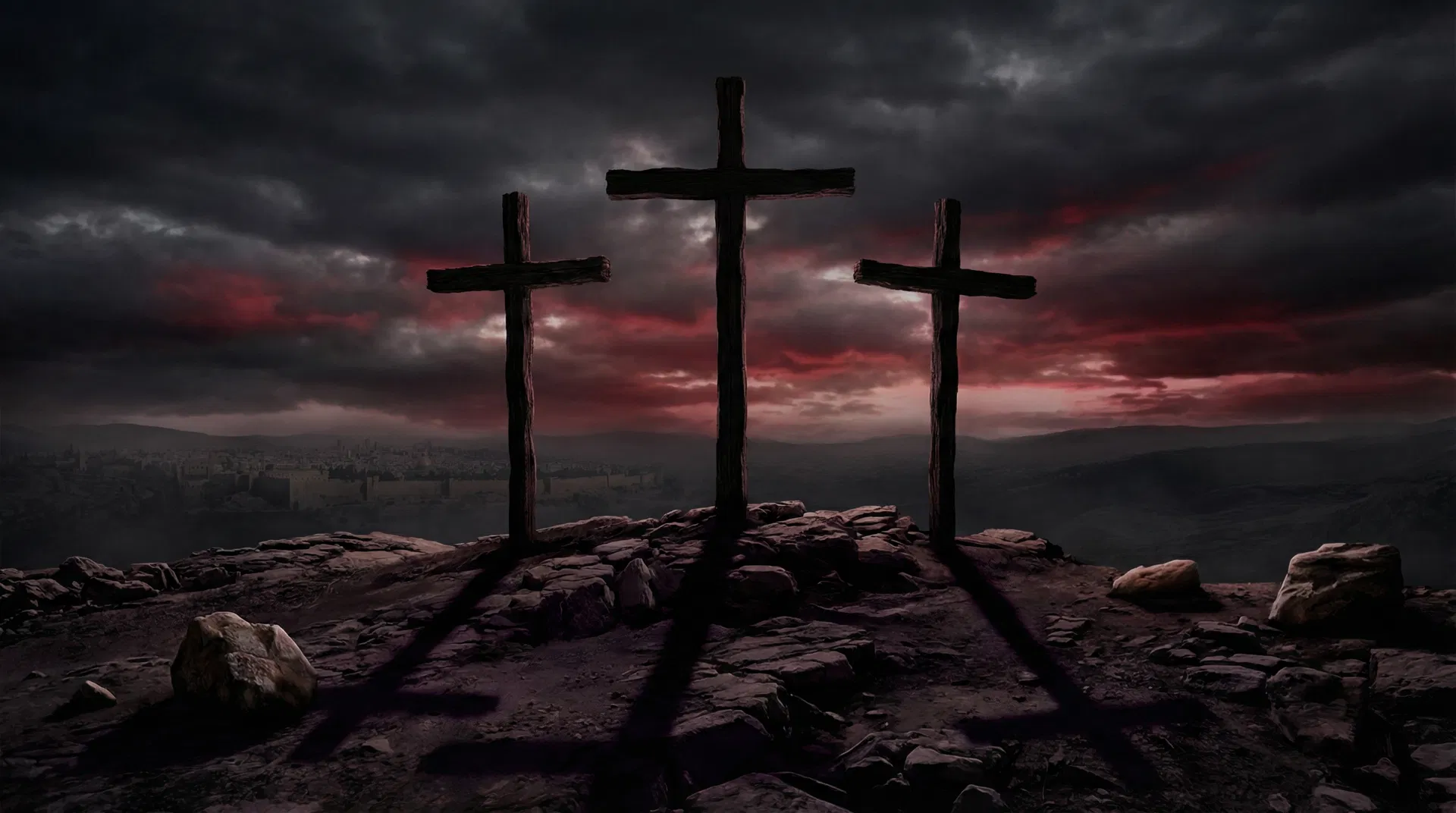
Holy Week Friday: Why This Day Changes Everything
Good Friday is the hinge of human history. Through six key passages — from Isaiah's prophecy to the tearing of the temple curtain — this verse-by-verse study explores the Greek behind 'It is finished' and why the cross changes everything.
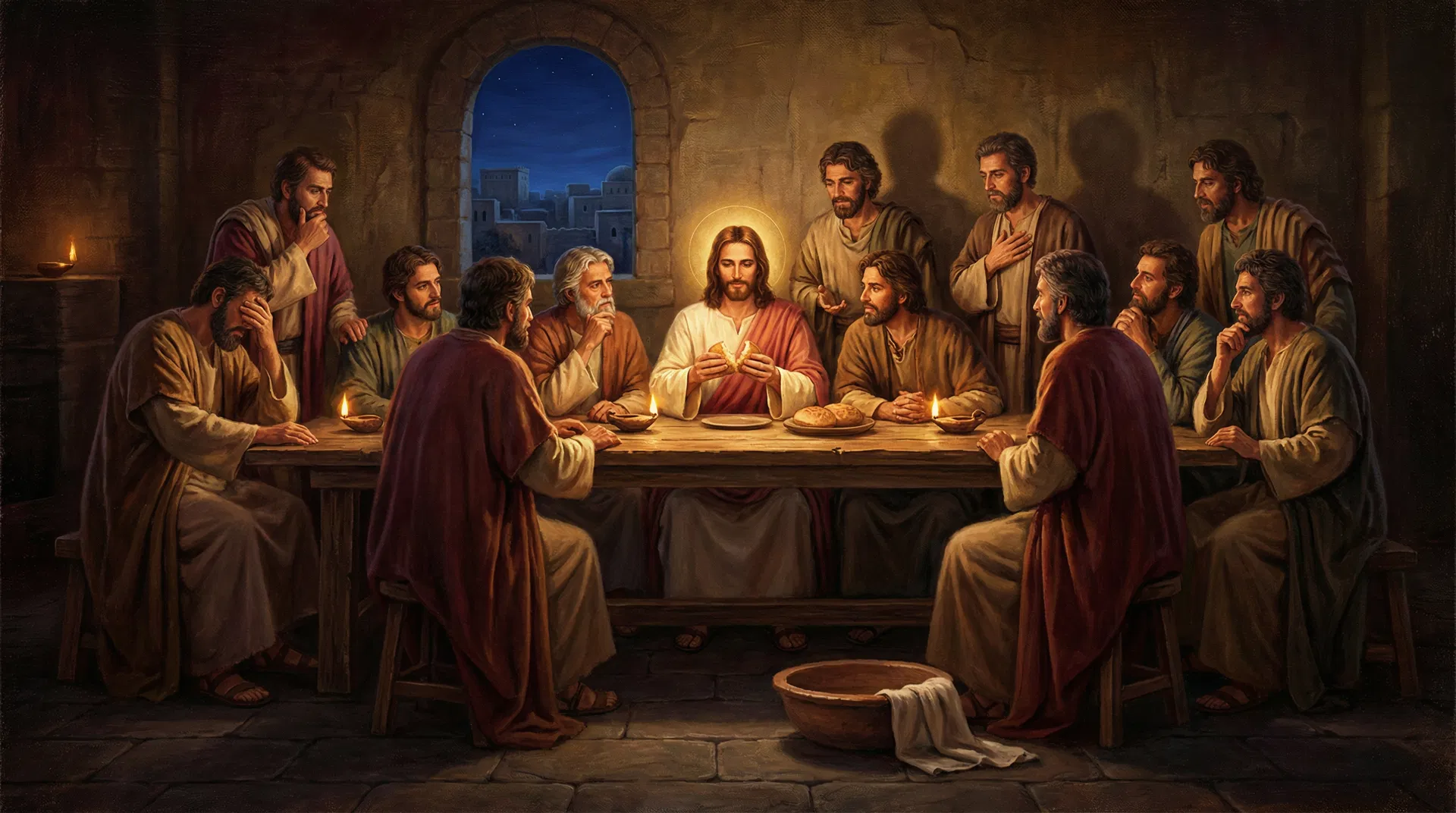
Holy Week Thursday: The Last Supper
Thursday of Holy Week is the most event-dense day in the Passion narrative. Within a single evening, Jesus washed His disciples' feet, instituted communion, delivered His longest recorded prayer, and surrendered Himself in Gethsemane.
Community Discussion
(0)Sign in to join the discussion.
No comments yet. Be the first to share your thoughts!