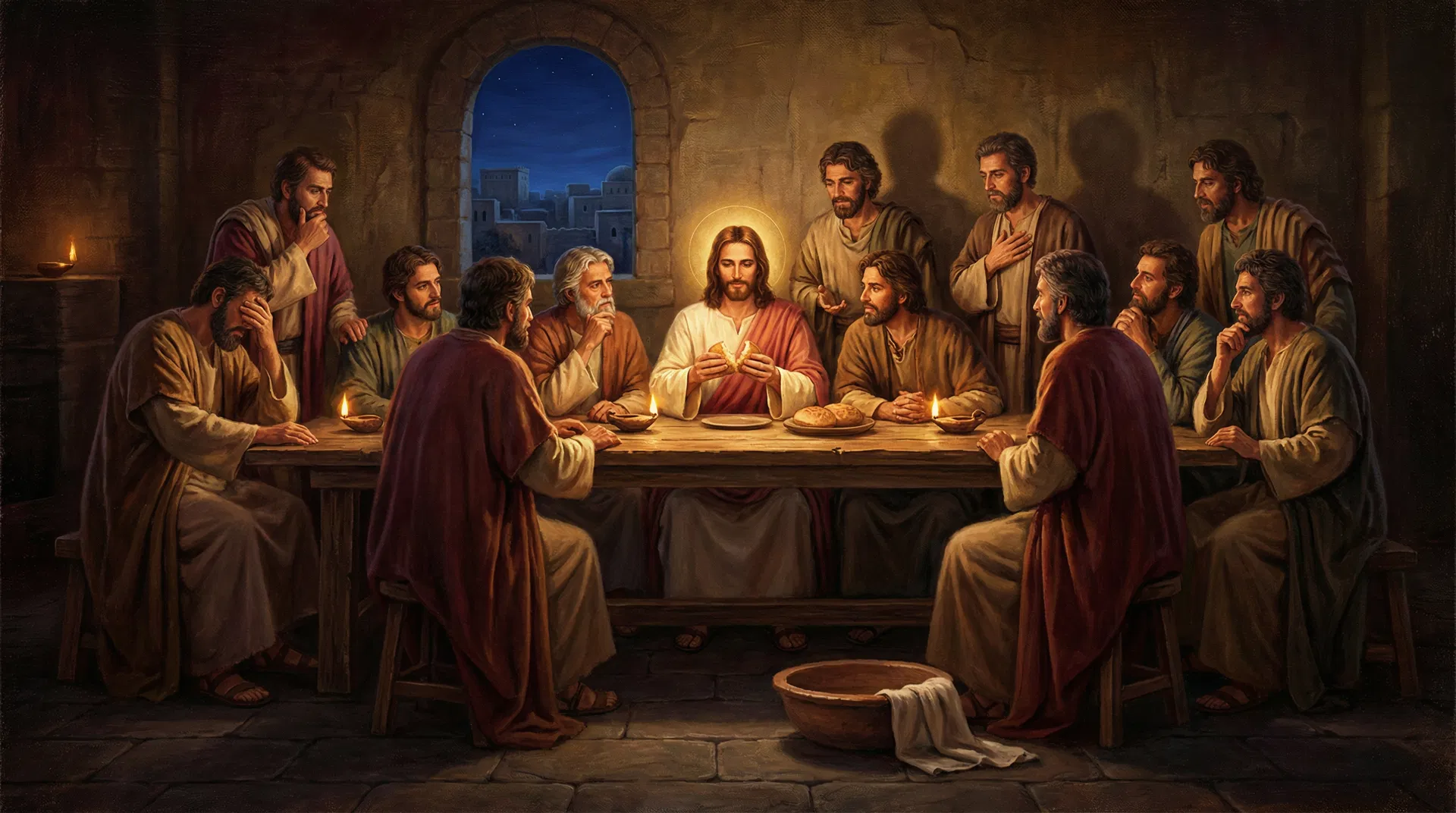
Holy Week Thursday: The Last Supper
Thursday of Holy Week is the most event-dense day in the Passion narrative. Within a single evening, Jesus washed His disciples' feet, instituted communion, delivered His longest recorded prayer, and surrendered Himself in Gethsemane.
The Upper Room: Where Everything Changed
Thursday of Holy Week — known historically as Maundy Thursday — is the most event-dense day in the Passion narrative. Within the span of a single evening, Jesus washed His disciples' feet, instituted the Lord's Supper, delivered His longest recorded prayer, and surrendered Himself in a moonlit garden. Each act carried the weight of a final statement, and together they form the theological foundation for how the church has worshiped, served, and loved for two thousand years. The word "Maundy" itself comes from the Latin mandatum, meaning "commandment" — a direct reference to the new commandment Jesus gave that night. If Tuesday was a day of public teaching [blocked] and Wednesday a day of silent preparation [blocked], Thursday was the night Jesus showed His disciples what the kingdom of God actually looks like.
The Master Who Knelt: Washing the Disciples' Feet
"Jesus, knowing that the Father had given all things into his hands, and that he had come from God and was going back to God, rose from supper. He laid aside his outer garments, and taking a towel, tied it around his waist. Then he poured water into a basin and began to wash the disciples' feet and to wipe them with the towel that was wrapped around him." — John 13:3-5 (ESV)
Read Luke 22 in context
Read the full passage with verse-by-verse commentary, historical context, and parallel accounts — free, no account required.
John's Gospel frames this scene with a stunning theological statement: Jesus knew He held all authority, knew His divine origin, knew His divine destination — and with that full awareness of His cosmic identity, He picked up a towel. The Greek verb niptein (to wash) was the word used for the menial task assigned to the lowest household servant. No rabbi would perform it. No guest would expect it. Peter's shocked refusal in verse 8 ("You shall never wash my feet!") reveals how deeply this act violated every social expectation. Yet Jesus was not merely modeling humility as a moral lesson. He was redefining power itself. In the kingdom of God, authority flows downward. The one who holds "all things" in His hands uses those hands to wash dusty feet.
This Is My Body: The Institution of Communion
"And he took bread, and when he had given thanks, he broke it and gave it to them, saying, 'This is my body, which is given for you. Do this in remembrance of me.' And likewise the cup after they had eaten, saying, 'This cup that is poured out for you is the new covenant in my blood.'" — Luke 22:19-20 (ESV)
The Passover meal was already rich with symbolism — the unleavened bread recalled the haste of the Exodus, the wine recalled God's promise of redemption. But Jesus took these ancient symbols and filled them with new meaning. The Greek word anamnesis (remembrance) in verse 19 is far stronger than casual recollection. In its biblical usage, anamnesis means to re-present, to make a past event powerfully present in the current moment. Every time the church breaks bread and shares the cup, the cross is not merely remembered — it is proclaimed. The phrase "new covenant" (kaine diatheke) echoes Jeremiah 31:31-34, where God promised a covenant written not on stone but on the human heart. What the prophets foretold, Jesus inaugurated at a table with bread and wine.
If you find this kind of verse-by-verse commentary helpful, BibleCompass provides AI-powered commentary for every passage in the Bible. Try it free →
A New Commandment: The Mark of a Disciple
"A new commandment I give to you, that you love one another: just as I have loved you, you also are to love one another. By this all people will know that you are my disciples, if you have love for one another." — John 13:34-35 (ESV)
The command to love was not new in itself — Leviticus 19:18 had long instructed Israel to "love your neighbor as yourself." What made this commandment kaine (new in quality, not merely new in time) was the standard: "as I have loved you." The benchmark was no longer self-interest ("as yourself") but self-sacrifice. Jesus had just demonstrated this love by washing their feet, and within hours He would demonstrate it fully on the cross. The Greek agapao here carries the weight of deliberate, costly, unconditional commitment — not a feeling to be summoned but a decision to be made. This is why understanding the Bible verse by verse matters [blocked]: the surface reading says "love each other," but the original language reveals a radical redefinition of what love means.
The Longest Prayer: Jesus Intercedes for His Own
"I do not ask for these only, but also for those who will believe in me through their word, that they may all be one, just as you, Father, are in me, and I in you, that they also may be in us, so that the world may believe that you have sent me." — John 17:20-21 (ESV)
John 17 is often called the High Priestly Prayer — the longest continuous prayer of Jesus recorded in Scripture. What makes verses 20-21 extraordinary is their scope: Jesus was not praying only for the eleven men in the room. He was praying for every believer who would come after them, including those reading this article today. The Greek word hen (one) in "that they may all be one" does not mean uniformity of opinion but unity of purpose and love, modeled on the relationship between the Father and the Son. The prayer reveals that Christian unity is not a human achievement to be engineered but a divine gift to be received. When the church fragments into factions, it obscures the very evidence Jesus said would convince the world: "so that the world may believe that you have sent me."
Not My Will: The Agony in Gethsemane
"And going a little farther he fell on his face and prayed, saying, 'My Father, if it be possible, let this cup pass from me; nevertheless, not as I will, but as you will.'" — Matthew 26:39 (ESV)
After the supper and the prayer, Jesus led His disciples to a garden called Gethsemane — from the Hebrew gat shemanim, meaning "oil press." The name itself is a metaphor for what happened there: Jesus was pressed under a weight no human being had ever carried. The Greek word poterion (cup) was a common Old Testament metaphor for God's wrath against sin (Isaiah 51:17; Jeremiah 25:15). Jesus was not asking to avoid physical pain alone — He was asking whether there was any other way to absorb the full judgment of God against human sin. Luke's Gospel adds that "his sweat became like great drops of blood" (Luke 22:44 [blocked]), a medical condition known as hematidrosis caused by extreme anguish. Yet the prayer ends not with escape but with surrender: "not as I will, but as you will." The word thelema (will) appears twice — first as Jesus' human desire, then as the Father's sovereign purpose. The collision of those two wills in a single sentence is the hinge on which all of redemption turns.
Proclaiming His Death Until He Comes
"For as often as you eat this bread and drink the cup, you proclaim the Lord's death until he comes." — 1 Corinthians 11:26 (ESV)
Paul wrote these words roughly twenty years after the Last Supper, confirming that the early church understood communion not as a nostalgic ritual but as an active proclamation. The Greek verb kataggello (to proclaim) is the same word used for preaching the gospel publicly. Every communion table is a sermon without words — a visible declaration that Christ died, that His death accomplished something, and that He is coming back. The phrase "until he comes" anchors the Lord's Supper between two events: the cross behind us and the return ahead of us. It is both memorial and anticipation, grief and hope held in the same cup. For a deeper look at how Scripture layers meaning across testaments, explore how cross-references illuminate the Bible [blocked].
Living Thursday's Lessons Today
The events of Holy Week Thursday are not museum exhibits. They are invitations. The foot washing invites you to serve someone beneath your perceived station this week — not as a performance of humility but as a genuine act of love. Identify one person in your life who could use practical help and offer it without being asked. The communion table invites you to examine your own heart before God. Paul warned the Corinthians to "examine yourselves" before eating the bread and drinking the cup (1 Corinthians 11:28). Take time this week to sit quietly, confess what needs confessing, and receive the grace that the broken bread represents. The Gethsemane prayer invites you to bring your honest struggles to God — not with polished religious language but with the raw honesty of "let this cup pass from me" — and then to practice the hardest prayer in Scripture: "not my will, but yours."
Continue Your Holy Week Study
If you found these commentaries helpful, BibleCompass provides this kind of verse-by-verse AI commentary for every passage in the Bible. You can walk through the entire Passion narrative with historical context, Greek word studies, and cross-references — all personalized to your reading level. Start your Holy Week journey through Scripture today. Explore the Gospel of John on BibleCompass →
Recommended Reading
Deepen your study with these hand-picked books related to this article.
The Risen Jesus and Future Hope
Gary Habermas
Demonstrates the historicity of the resurrection and connects it to the Christian's future hope.
The Resurrection of the Son of God
N.T. Wright
A monumental scholarly work examining the historical evidence for the bodily resurrection of Jesus.
The Case for the Resurrection of Jesus
Gary Habermas & Michael Licona
A comprehensive, accessible resource providing detailed historical evidence for the resurrection of Jesus.
As an Amazon Associate, BibleCompass earns from qualifying purchases.
Get the 7-Day Holy Week Devotional
Palm Sunday → Resurrection Sunday — free, delivered to your inbox
Related Articles
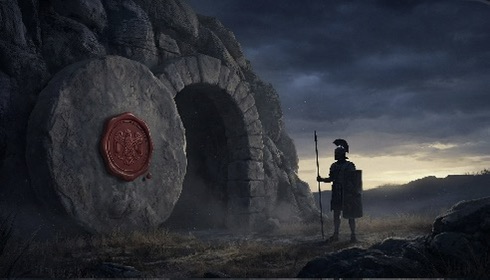
Holy Week: Resurrection Sunday — He Is Risen
Resurrection Sunday is the hinge point of all human history. This verse-by-verse study examines the empty tomb accounts across all four Gospels, the Greek behind the resurrection proclamation, and the historical evidence that has convinced skeptics for two thousand years.
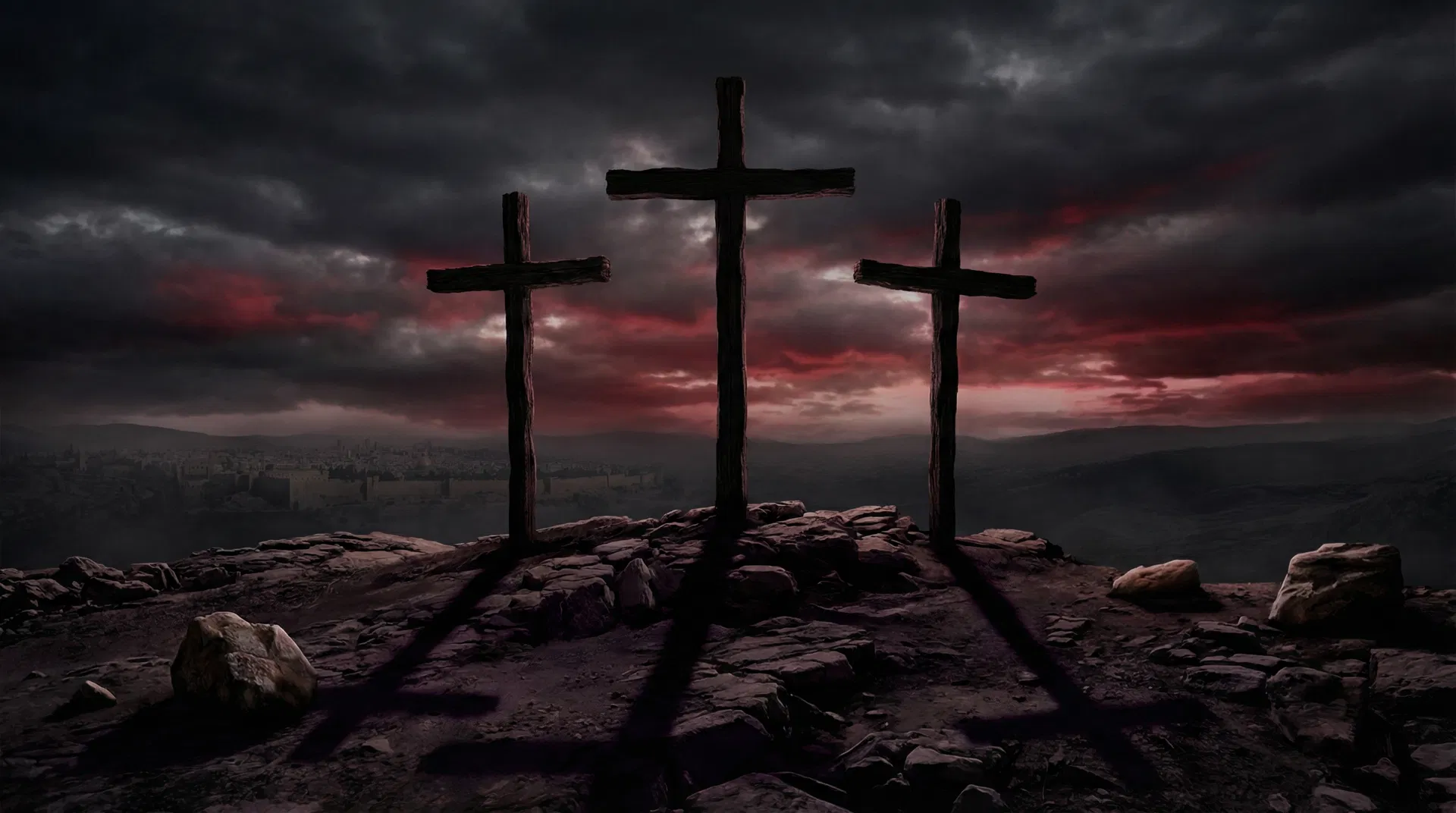
Holy Week Friday: Why This Day Changes Everything
Good Friday is the hinge of human history. Through six key passages — from Isaiah's prophecy to the tearing of the temple curtain — this verse-by-verse study explores the Greek behind 'It is finished' and why the cross changes everything.
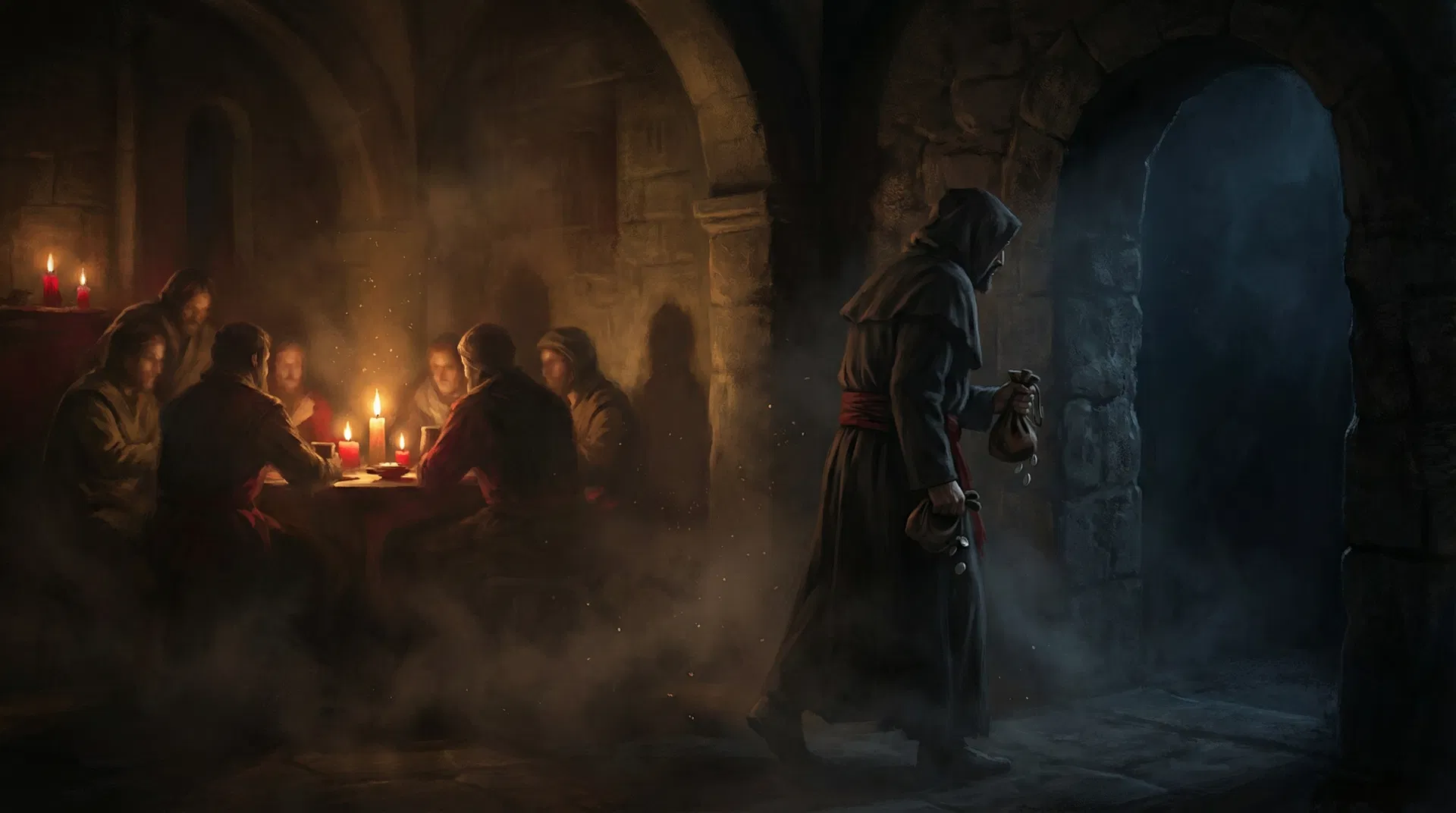
Holy Week Wednesday: The Silent Betrayal
Wednesday of Holy Week is the quietest day in the Gospel narrative — and that silence is what makes it so unsettling. Discover how Judas's betrayal for 30 silver coins fulfilled ancient prophecy and set the crucifixion in motion.
Community Discussion
(0)Sign in to join the discussion.
No comments yet. Be the first to share your thoughts!