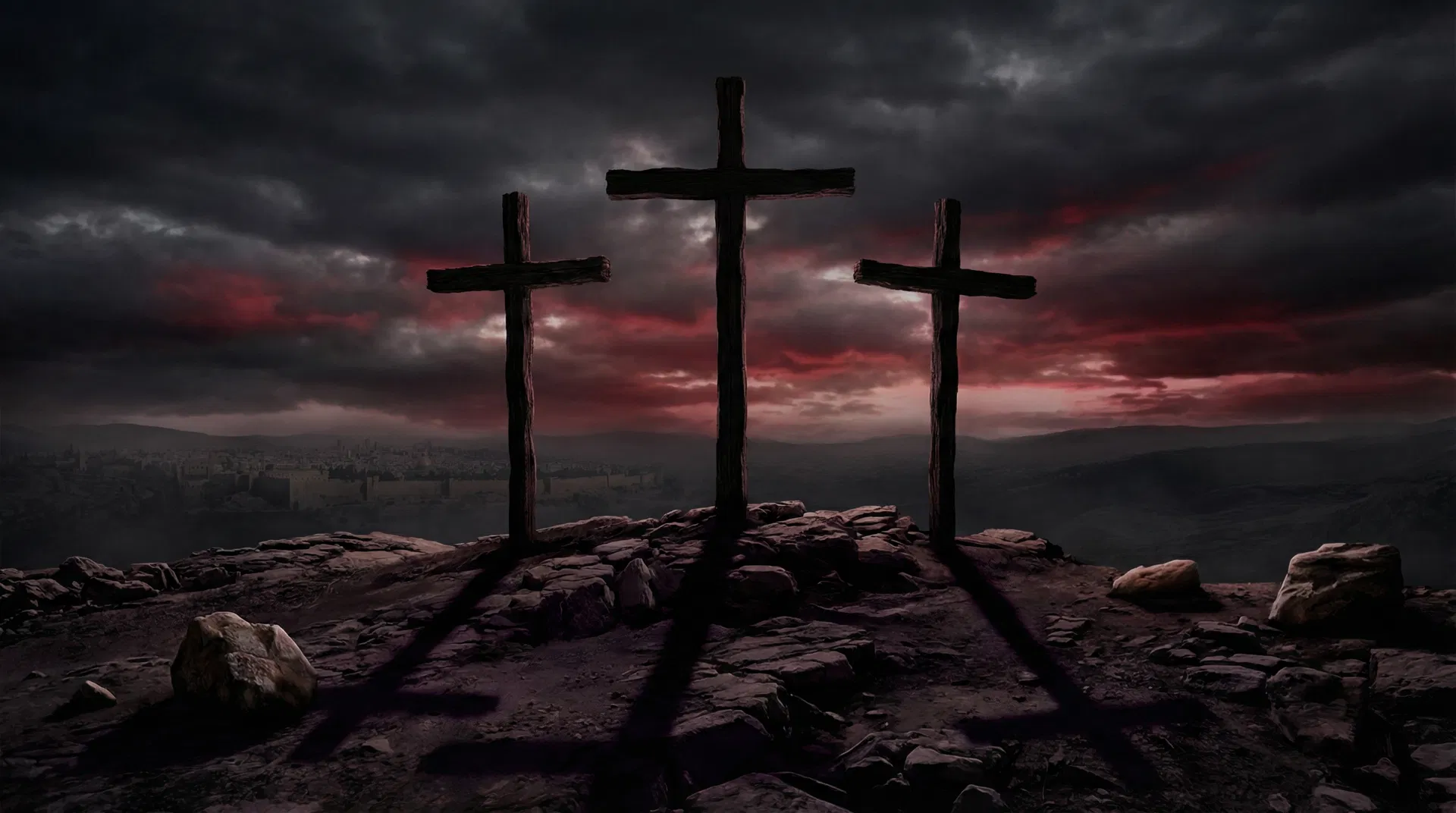
Holy Week Friday: Why This Day Changes Everything
Good Friday is the hinge of human history. Through six key passages — from Isaiah's prophecy to the tearing of the temple curtain — this verse-by-verse study explores the Greek behind 'It is finished' and why the cross changes everything.
The Day the Sky Went Dark
Good Friday is the most paradoxical name in the Christian calendar. There is nothing superficially "good" about the torture and execution of an innocent man. Yet Christians for two thousand years have called this day good because of what it accomplished — not despite the suffering, but through it. If Thursday was the night of intimate farewell [blocked], Friday was the day that farewell became a sacrifice. Between midnight and three in the afternoon, Jesus of Nazareth endured six trials, a Roman scourging, public humiliation, and death by crucifixion — the most agonizing form of execution ever devised. But the New Testament writers do not present the cross as a tragedy that God salvaged. They present it as the plan God ordained before the foundation of the world (Acts 2:23; 1 Peter 1:20). Understanding why requires walking through the key passages of Good Friday with the kind of historical depth and original language insight that transforms a familiar story into a life-altering reality.
The Prophecy Fulfilled: Isaiah's Suffering Servant
"But he was pierced for our transgressions; he was crushed for our iniquities; upon him was the chastisement that brought us peace, and with his wounds we are healed." — Isaiah 53:5 (ESV)
Seven hundred years before Jesus was born, the prophet Isaiah described a figure who would suffer not for his own sins but for the sins of others. The Hebrew word for "pierced" is chalal (חָלַל), which means to bore through or fatally wound — a remarkably specific term that anticipates the nails of crucifixion centuries before the Romans invented the practice. The word for "crushed" is daka (דָּכָא), meaning to pulverize or shatter completely. Isaiah is not describing a minor inconvenience; he is describing total devastation absorbed on behalf of someone else. The phrase "chastisement that brought us peace" uses the Hebrew shalom (שָׁלוֹם) — not merely the absence of conflict, but wholeness, completeness, and right relationship with God. The Suffering Servant of Isaiah 53 was wounded so that others could be made whole. The earliest Christians recognized Jesus as the fulfillment of this prophecy, and the reliability of these ancient texts [blocked] has been confirmed by the Dead Sea Scrolls, which contain a complete copy of Isaiah dating to approximately 150 BC — proving the prophecy predates the events it describes.
The Scourging: Roman Brutality Before the Cross
"So Pilate, wishing to satisfy the crowd, released for them Barabbas, and having scourged Jesus, he delivered him to be crucified." — Mark 15:15 (ESV)
Mark records the scourging in a single clause, but the physical reality behind that word was devastating. The Greek verb phragellosas (φραγελλώσας) refers to the Roman flagellum, a short whip with multiple leather thongs embedded with pieces of bone, lead, and sharp metal. Historical sources describe the flagellum tearing flesh to the bone, and Roman law placed no limit on the number of strikes — unlike Jewish law, which capped flogging at forty lashes. Medical historians have noted that many victims did not survive the scourging itself. Pilate's decision to release Barabbas — a convicted insurrectionist and murderer — instead of Jesus is one of the most bitter ironies in Scripture. The guilty man walked free while the innocent man was handed over to die. This exchange is not merely a historical footnote; it is a picture of substitutionary atonement in miniature. Barabbas received what Jesus deserved (freedom), and Jesus received what Barabbas deserved (death). Every person who has ever trusted in Christ stands in the position of Barabbas.
The Prayer from the Cross: Radical Forgiveness
"And Jesus said, 'Father, forgive them, for they know not what they do.' And they cast lots to divide his garments." — Luke 23:34 (ESV)
Of all the words Jesus spoke from the cross, this may be the most astonishing. The Greek word for "forgive" is aphes (ἄφες), the imperative form of aphiemi, which means to release, to let go, to send away. It is the same word used in the Lord's Prayer — "forgive us our debts" (Matthew 6:12). Jesus was not merely expressing a wish; He was actively interceding for the very people driving nails into His hands. The phrase "they know not what they do" does not excuse the act — it reveals the depth of human blindness. The Roman soldiers thought they were executing a provincial criminal. The religious leaders thought they were protecting their authority. Neither group understood that they were participating in the central event of cosmic history.
If you find this kind of verse-by-verse commentary helpful, BibleCompass provides AI-powered commentary for every passage in the Bible. Try it free →
Luke's inclusion of the detail about casting lots for Jesus's garments is significant — it fulfills Psalm 22:18, written by David approximately 1,000 years earlier: "They divide my garments among them, and for my clothing they cast lots." The convergence of prophecy and history at the cross is not coincidental; it is evidence of a sovereign plan unfolding exactly as God intended.
The Cross: The Instrument of Atonement
"So they took Jesus, and he went out, bearing his own cross, to the place called The Place of a Skull, which in Aramaic is called Golgotha. There they crucified him, and with him two others, one on either side, and Jesus between them." — John 19:17-18 (ESV)
The Greek word for "cross" is stauros (σταυρός), which originally referred to an upright wooden stake. By the first century, Roman crucifixion involved a vertical post (stipes) and a horizontal crossbeam (patibulum) that the condemned man carried to the execution site. The victim's wrists were nailed to the crossbeam, which was then hoisted onto the vertical post. Death came slowly — sometimes over two or three days — through a combination of shock, blood loss, dehydration, and asphyxiation. As the body's weight pulled downward, breathing required pushing up against the nails in the feet, creating a cycle of excruciating effort. The Latin word excruciating itself comes from ex cruciare — "from the cross." John notes that Jesus was crucified between two criminals, fulfilling Isaiah 53:12: "He was numbered with the transgressors." The placement was deliberate — Jesus, the sinless one, was positioned in the middle of sinners. This is the gospel in a single image: God entering the space between guilty humanity and the judgment they deserve.
"It Is Finished": The Most Important Word Ever Spoken
"When Jesus had received the sour wine, he said, 'It is finished,' and he bowed his head and gave up his spirit." — John 19:30 (ESV)
The English translation "It is finished" is three words. In the original Greek, it is one: tetelestai (τετέλεσται). This single word carries more theological weight than perhaps any other utterance in Scripture. Tetelestai is the perfect passive indicative of the verb teleo (τελέω), meaning to bring to completion, to accomplish, to fulfill entirely. The perfect tense in Greek indicates a completed action with ongoing results — it was finished, and it remains finished. Archaeologists have discovered this exact word stamped on ancient papyrus receipts and tax documents throughout the Roman world, where it meant "paid in full." When a debt was settled, the creditor wrote tetelestai across the certificate of debt. Jesus was not crying out in defeat. He was making a declaration of victory. The debt of human sin — every violation of God's law, every act of rebellion, every failure to love — was paid in full. Nothing remained to be added. No religious ritual, no moral achievement, no human effort could improve upon what Christ accomplished in that moment. The Apostle Paul would later write, "He forgave us all our sins, having canceled the charge of our legal indebtedness, which stood against us and condemned us; he has taken it away, nailing it to the cross" (Colossians 2:13-14, ESV). The certificate of debt was nailed to the cross, and across it was written: tetelestai.
The Curtain Torn: Access to God Restored
"And behold, the curtain of the temple was torn in two, from top to bottom. And the earth shook, and the rocks were split." — Matthew 27:51 (ESV)
The temple curtain — the Greek katapetasma (καταπέτασμα) — was the massive veil separating the Holy of Holies from the rest of the temple. According to Jewish tradition recorded in the Mishnah, this curtain was approximately sixty feet tall, thirty feet wide, and four inches thick — so heavy that it required three hundred priests to handle it. Only the High Priest could pass beyond it, and only once a year on the Day of Atonement (Yom Kippur), carrying the blood of a sacrifice. The curtain represented the barrier between a holy God and sinful humanity. When it tore "from top to bottom" at the moment of Jesus's death, the direction is theologically significant — it was torn from God's side downward, not from the bottom up by human hands. God Himself was removing the barrier. The writer of Hebrews explains the meaning: "We have confidence to enter the holy places by the blood of Jesus, by the new and living way that he opened for us through the curtain, that is, through his flesh" (Hebrews 10:19-20). Access to God was no longer restricted to a single priest on a single day. Through the cross, every person who trusts in Christ has direct, unmediated access to the presence of God.
Living in the Shadow of the Cross Today
Good Friday is not merely a historical event to commemorate — it is a reality to inhabit. The cross answers the deepest questions of human existence: Am I loved? (Yes — "God shows his love for us in that while we were still sinners, Christ died for us," Romans 5:8.) Can I be forgiven? (Yes — tetelestai, paid in full.) Is there hope beyond suffering? (Yes — the cross was not the end of the story, as the full Holy Week narrative [blocked] reveals.)
This Good Friday, set aside time to read John 18-19 slowly and without distraction. Write down one phrase that strikes you and carry it with you through the day. Let the weight of what happened at Golgotha reshape how you see your own failures, your own need for grace, and the extravagant love of a God who would rather die than live without you.
Explore the Cross with Verse-by-Verse Commentary
If you found these commentaries helpful, BibleCompass provides this kind of verse-by-verse AI commentary for every passage in the Bible — including the complete Passion narrative across all four Gospels. You can follow a personalized reading plan, explore cross-references that connect the crucifixion to Old Testament prophecy, and build a daily study habit — all completely free. Try BibleCompass today →
Recommended Reading
Deepen your study with these hand-picked books related to this article.
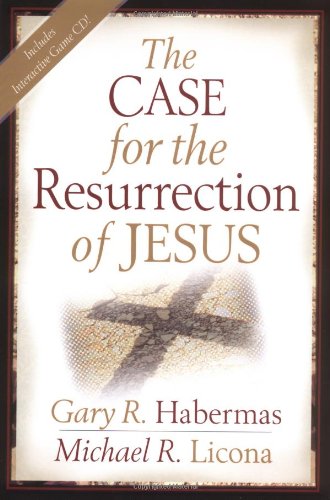
The Case for the Resurrection of Jesus
Gary Habermas & Michael Licona
A comprehensive, accessible resource providing detailed historical evidence for the resurrection of Jesus.
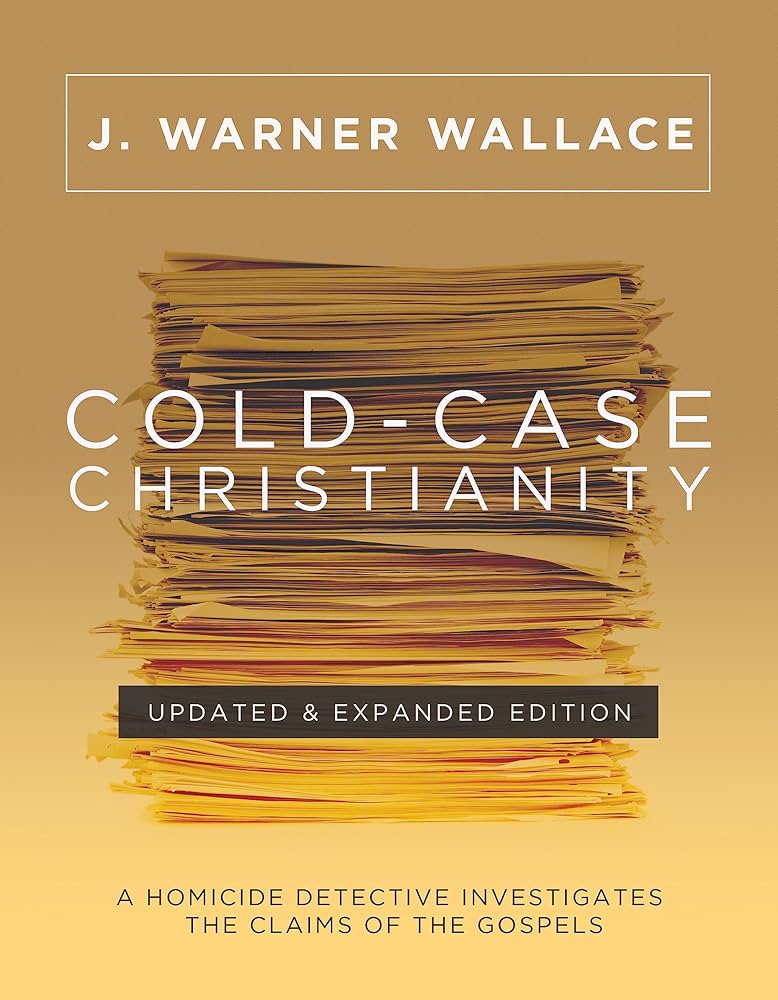
Cold-Case Christianity
J. Warner Wallace
A cold-case detective applies his investigative skills to examine the evidence for the Christian faith, making the case for the reliability of the Gospels. Updated & Expanded Edition.
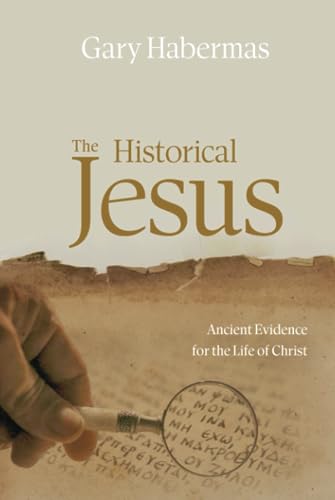
The Historical Jesus
Gary Habermas
Examines archaeological, textual, and extra-biblical evidence to establish the historicity of Jesus Christ.
As an Amazon Associate, BibleCompass earns from qualifying purchases.
Get the 7-Day Holy Week Devotional
Palm Sunday → Resurrection Sunday — free, delivered to your inbox
Related Articles
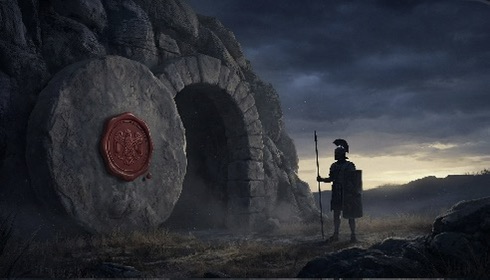
Holy Week: Resurrection Sunday — He Is Risen
Resurrection Sunday is the hinge point of all human history. This verse-by-verse study examines the empty tomb accounts across all four Gospels, the Greek behind the resurrection proclamation, and the historical evidence that has convinced skeptics for two thousand years.
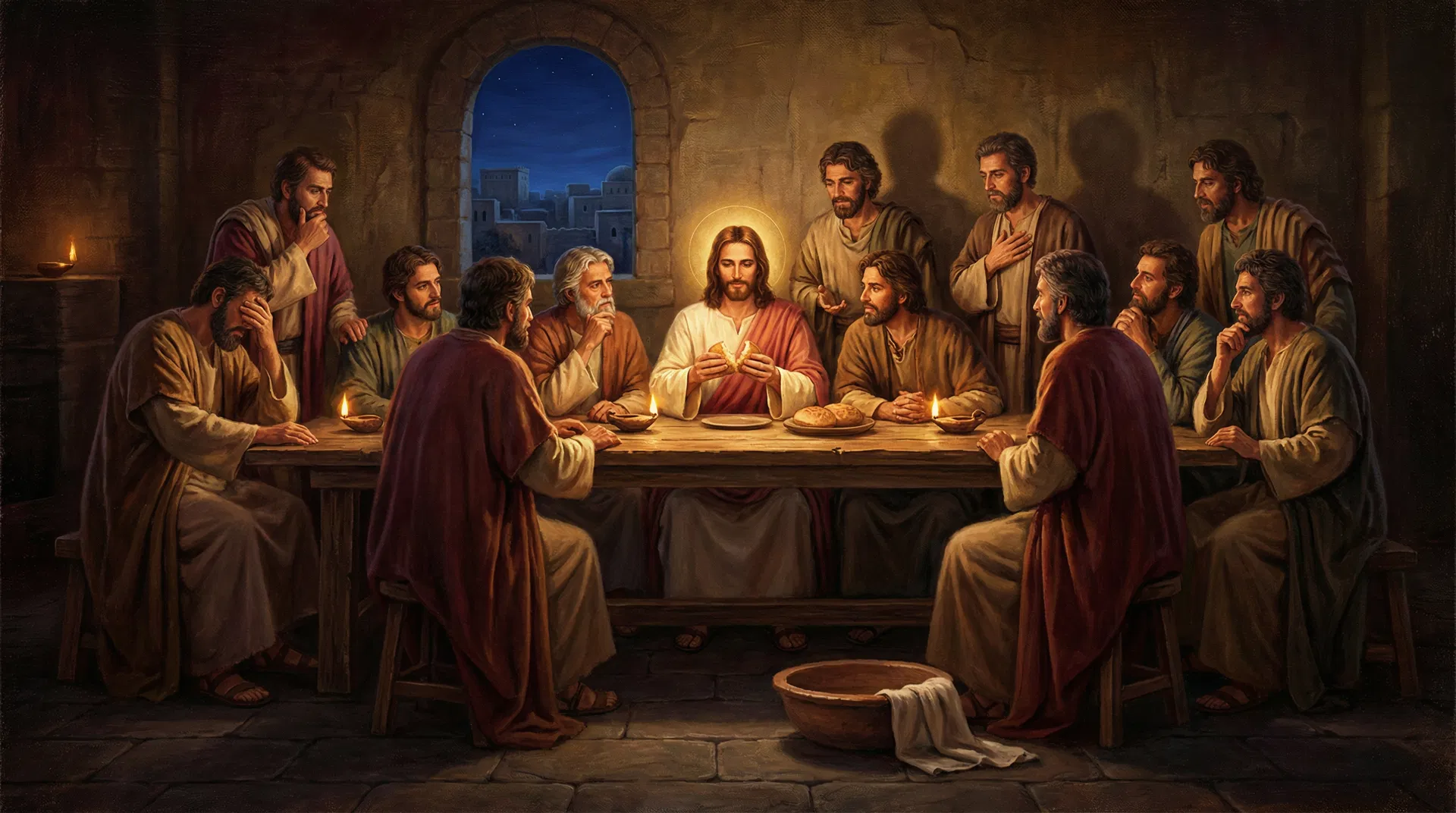
Holy Week Thursday: The Last Supper
Thursday of Holy Week is the most event-dense day in the Passion narrative. Within a single evening, Jesus washed His disciples' feet, instituted communion, delivered His longest recorded prayer, and surrendered Himself in Gethsemane.
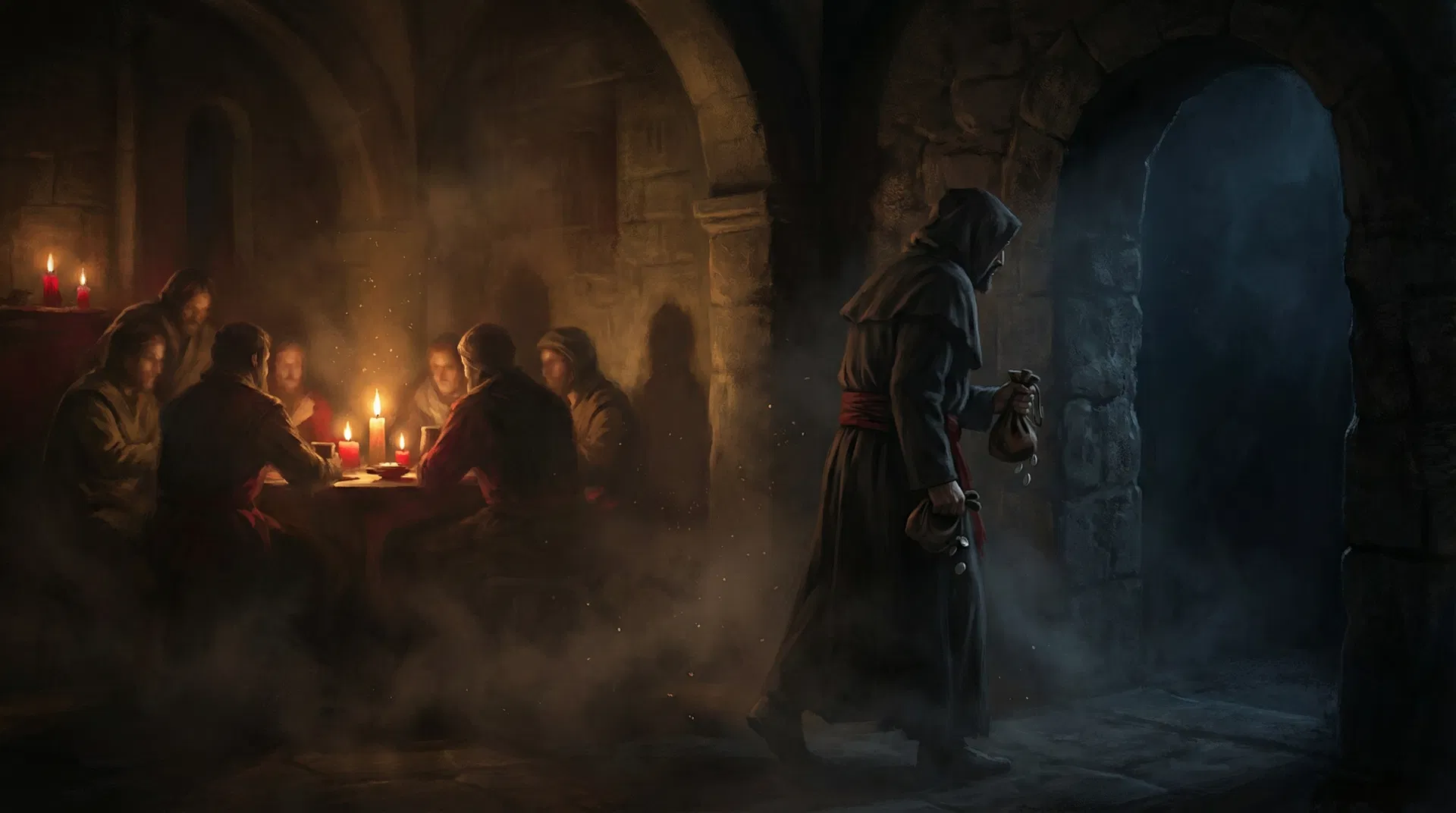
Holy Week Wednesday: The Silent Betrayal
Wednesday of Holy Week is the quietest day in the Gospel narrative — and that silence is what makes it so unsettling. Discover how Judas's betrayal for 30 silver coins fulfilled ancient prophecy and set the crucifixion in motion.
Community Discussion
(0)Sign in to join the discussion.
No comments yet. Be the first to share your thoughts!