
15 Bible Verses for Anxiety and Worry
Anxiety touches every part of life. These 15 Bible verses address worry from every angle — from surrendering control to finding peace, from trusting God's provision to resting in His presence.
If you are reading this, you may be carrying a weight that feels too heavy. Anxiety touches every part of life — from sleepless nights to racing thoughts during the day, from the knot in your stomach before a difficult conversation to the overwhelming dread that settles in without warning. You are not alone in this struggle. According to the Anxiety and Depression Association of America, anxiety disorders affect over 40 million adults in the United States each year. The good news is that Scripture speaks directly to this struggle. God does not dismiss your fear or minimize your pain. Instead, He meets you in it with promises that have sustained His people for thousands of years. These 15 Bible verses address anxiety and worry from every angle — from surrendering control to finding peace, from trusting God's provision to resting in His presence.
Surrendering Anxiety to God
"Do not be anxious about anything, but in everything by prayer and supplication with thanksgiving let your requests be made known to God. And the peace of God, which surpasses all understanding, will guard your hearts and your minds in Christ Jesus." — Philippians 4:6-7 (ESV)
The Apostle Paul wrote these words from a Roman prison, not from a place of comfort. The Greek word for "anxious" here is merimnao, which means to be pulled apart or divided in mind. Paul's remedy is not to suppress anxiety but to redirect it — to bring every worry before God through prayer. The phrase "with thanksgiving" is critical: gratitude reorients the anxious mind toward what God has already done. When you feel anxiety rising, name the specific worry aloud in prayer and follow it with one thing you are thankful for.
"Cast all your anxiety on him, because he cares for you." — 1 Peter 5:7 (ESV)
Peter uses the Greek word epiripto, which means to throw something upon another with force. This is not a gentle suggestion to hand your worries over — it is a command to hurl them onto God. The reason Peter gives is not that God is powerful enough to handle them (though He is), but that He cares for you. The God who sustains the universe is personally concerned with what keeps you awake at night.
"Come to me, all who labor and are heavy laden, and I will give you rest. Take my yoke upon you, and learn from me, for I am gentle and lowly in heart, and you will find rest for your souls." — Matthew 11:28-29 (ESV)
Jesus spoke these words to people crushed under the weight of religious legalism and daily hardship. The word "rest" here is anapauo in Greek — it means to cause to cease, to refresh, to give intermission. Jesus does not promise the absence of difficulty. He promises His presence in it. A yoke is a shared burden, and when you are yoked with Christ, He carries the weight you cannot.
If you find this kind of verse-by-verse commentary helpful, BibleCompass provides AI-powered commentary for every passage in the Bible. Try it free → [blocked]
Trusting God's Provision and Plan
"Therefore I tell you, do not be anxious about your life, what you will eat or what you will drink, nor about your body, what you will put on. Is not life more than food, and the body more than clothing? Look at the birds of the air: they neither sow nor reap nor gather into barns, and yet your heavenly Father feeds them. Are you not of more value than they?" — Matthew 6:25-26 (ESV)
In the Sermon on the Mount, Jesus addresses the most common source of anxiety: provision. The word "anxious" here is again merimnao — the same divided-mind worry. Jesus uses an argument from lesser to greater: if God feeds the birds who cannot plant or harvest, how much more will He provide for you, whom He created in His own image? This is not a call to irresponsibility but to trust. Do your work, but release the outcome to God.
"And my God will supply every need of yours according to his riches in glory in Christ Jesus." — Philippians 4:19 (ESV)
Paul wrote this to the Philippian church after they had sent him financial support in prison. The promise is specific: God supplies every need, not every want. The phrase "according to his riches" means God gives out of His abundance, not out of scarcity. When anxiety about finances or the future grips you, this verse reframes the question from "Do I have enough?" to "Is God enough?"
"'For I know the plans I have for you,' declares the Lord, 'plans for welfare and not for evil, to give you a future and a hope.'" — Jeremiah 29:11 (ESV)
This verse was originally spoken to the Israelites in Babylonian exile — people who had lost their homes, their temple, and their freedom. God's promise of a future and a hope came not when things were going well, but when everything had fallen apart. The Hebrew word for "welfare" is shalom, which means completeness, wholeness, and peace. God's plans for you are not plans for destruction but for restoration, even when your current circumstances suggest otherwise.
Finding Peace in God's Presence
"Peace I leave with you; my peace I give to you. Not as the world gives do I give to you. Let not your hearts be troubled, neither let them be afraid." — John 14:27 (ESV)
Jesus spoke these words on the night before His crucifixion, knowing the suffering that awaited Him. The peace He offers is not the absence of conflict — it is the presence of God in the midst of conflict. The Greek word for peace, eirene, carries the same weight as the Hebrew shalom. It is a peace that does not depend on circumstances. When the world offers temporary relief through distraction or avoidance, Jesus offers a peace that endures through the worst of storms.
"You keep him in perfect peace whose mind is stayed on you, because he trusts in you." — Isaiah 26:3 (ESV)
The Hebrew here literally reads "peace, peace" — shalom shalom — a doubling that emphasizes completeness. The condition is a mind "stayed" on God, which means fixed, supported, and leaning upon Him. Anxiety pulls your mind in a hundred directions. This verse says that peace comes from directing your attention back to one place: the character and promises of God. As Greg Laurie often teaches, peace is not found in the absence of problems but in the presence of God.
"The Lord is near. Do not be anxious about anything." — Philippians 4:5-6a (ESV)
Paul connects proximity to peace. The reason you can release anxiety is not because your problems are small, but because your God is near. The Greek word engus means close at hand, both in time and space. God is not distant or disinterested. He is present with you right now, in this moment, in whatever you are facing.
Strength and Courage in the Face of Fear
"Fear not, for I am with you; be not dismayed, for I am your God; I will strengthen you, I will help you, I will uphold you with my righteous right hand." — Isaiah 41:10 (ESV)
God spoke these words to Israel during a time of national crisis. The three promises — strengthen, help, uphold — form a progression. God gives you the internal strength to face difficulty, the external help to navigate it, and the sustaining power to endure through it. The phrase "righteous right hand" signifies God's covenant faithfulness. He does not help you because you deserve it but because He promised to.
"When I am afraid, I put my trust in you. In God, whose word I praise, in God I trust; I shall not be afraid. What can flesh do to me?" — Psalm 56:3-4 (ESV)
David wrote this Psalm when the Philistines had seized him in Gath — a moment of genuine, life-threatening danger. Notice that David does not say "I never feel afraid." He says "when I am afraid." Faith does not eliminate fear. Faith is what you do with the fear. David's response to fear is deliberate trust, and that trust is grounded in God's Word. The rhetorical question — "What can flesh do to me?" — is not denial of danger but a declaration of perspective.
"For God gave us a spirit not of fear but of power and love and self-control." — 2 Timothy 1:7 (ESV)
Paul wrote this to Timothy, a young pastor who was likely intimidated by the challenges of ministry. The word for "fear" here is deilia in Greek, meaning cowardice or timidity. Paul contrasts it with three gifts: power (dunamis — the ability to act), love (agape — the motivation to serve), and self-control (sophronismos — a sound, disciplined mind). Anxiety often makes you feel powerless, isolated, and out of control. This verse declares that the Spirit within you provides the exact opposite.
Rest and Renewal for the Weary Soul
"He gives power to the faint, and to him who has no might he increases strength. Even youths shall faint and be weary, and young men shall utterly fall, but they who wait for the Lord shall renew their strength; they shall mount up with wings like eagles; they shall run and not be weary; they shall walk and not faint." — Isaiah 40:29-31 (ESV)
Isaiah wrote these words to a nation exhausted by oppression. The Hebrew word for "wait" is qavah, which means to bind together, like twisting strands into a rope. Waiting on God is not passive — it is an active binding of your hope to His promises. The progression from mounting up to running to walking is deliberate: God sustains you not only in the dramatic moments of soaring faith but in the ordinary, daily act of putting one foot in front of the other. If you are looking for a structured way to spend daily time in Scripture, a reading plan can help you build that habit [blocked].
"The Lord is my shepherd; I shall not want. He makes me lie down in green pastures. He leads me beside still waters. He restores my soul." — Psalm 23:1-3a (ESV)
David, a former shepherd himself, understood what sheep need: provision, rest, and guidance. The phrase "He makes me lie down" suggests that sometimes God must bring us to a stop because we will not stop ourselves. The "still waters" are literally "waters of rest" in Hebrew — menuchah. Anxiety drives you to constant motion and vigilance. God leads you to stillness. Understanding how cross-references connect this Psalm to other passages [blocked] reveals how the shepherd imagery runs throughout all of Scripture.
"In peace I will both lie down and sleep; for you alone, O Lord, make me dwell in safety." — Psalm 4:8 (ESV)
David wrote this Psalm during a time of opposition and slander. Yet he could sleep in peace — not because his enemies had disappeared, but because his security rested in God alone. The Hebrew word for "safety" is betach, meaning confidence and trust. If anxiety keeps you awake at night, this verse is your prayer: "Lord, You alone are my safety. I can rest because You are watching."
"And which of you by being anxious can add a single hour to his span of life?" — Matthew 6:27 (ESV)
Jesus asks a simple, devastating question. Anxiety promises that if you worry enough, you can control the outcome. Jesus exposes that promise as a lie. Worry has never added a single hour to anyone's life. It has, however, stolen countless hours of peace, joy, and presence. This verse is not a rebuke — it is an invitation to release the illusion of control and rest in the sovereignty of God. As Mike Winger teaches, the antidote to anxiety is not more information or better planning — it is trust in the God who holds your future.
Putting These Verses into Practice
Reading these verses is the first step. Living them is the next. Here are two practical ways to begin applying Scripture to your anxiety today.
Create a Verse Card System. Choose three verses from this list that speak most directly to your situation. Write each one on an index card or save it as a note on your phone. When anxiety rises, read the verse aloud, slowly. Speaking Scripture engages your mind and body in a way that silent reading does not. Place the cards where you will see them — on your bathroom mirror, your desk, or your dashboard. Over time, these verses will become your first response to worry rather than your last resort.
Establish a Daily Scripture and Prayer Rhythm. Set aside ten minutes each morning to read one passage and pray through it. Use the pattern from Philippians 4:6: name your anxiety specifically, ask God for help, and then thank Him for one thing He has already done. This practice rewires your morning from dread to trust. A verse-by-verse study approach [blocked] helps you go deeper than surface-level reading and builds the kind of understanding that sustains you when anxiety strikes.
Start Your Journey Toward Peace
If you found these commentaries helpful, BibleCompass provides this kind of verse-by-verse AI commentary for every passage in the Bible. You can explore any of these 15 verses with deeper historical context, original language insights, and cross-references that connect them to the rest of Scripture. Start a personalized reading plan focused on peace and anxiety, track your daily study habit, and build a foundation of biblical truth that anxiety cannot shake — all for free. Try BibleCompass today →
Recommended Reading
Deepen your study with these hand-picked books related to this article.
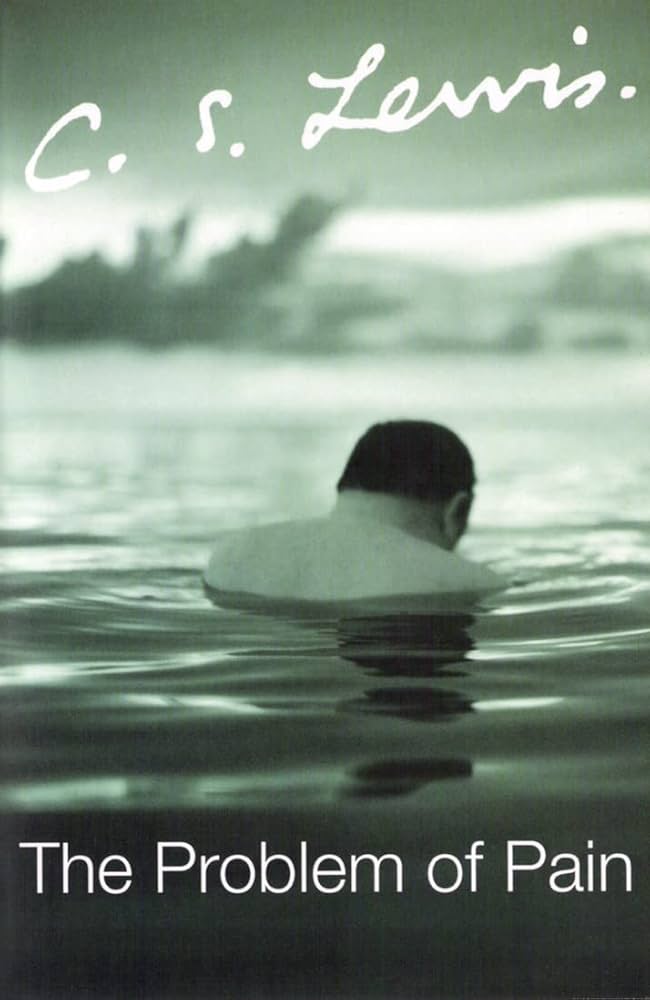
The Problem of Pain
C.S. Lewis
Tackles the intellectual problem of suffering and evil, exploring why a good God allows pain in the world.
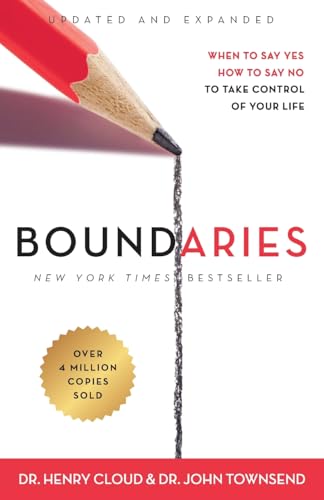
Boundaries
Dr. Henry Cloud & Dr. John Townsend
The Gold Medallion Award-winning guide to setting healthy, biblical boundaries in relationships and life.
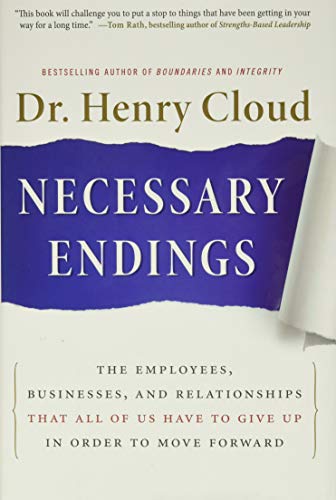
Necessary Endings
Dr. Henry Cloud
Shows how the right endings in business, relationships, and life lead to new beginnings and growth.
As an Amazon Associate, BibleCompass earns from qualifying purchases.
Get Free Daily Verses
AI-powered commentary delivered to your inbox every morning
Related Articles

Best Bible Reading Plans for Beginners
Starting the Bible can feel overwhelming with 66 books and over 31,000 verses. These reading plans give you a clear path to build a consistent, rewarding study habit.

Understanding Cross-References in the Bible
Cross-references are the threads that weave the Bible together. Understanding how to use them transforms your reading from surface-level to deeply interconnected.

KJV vs ESV vs NIV: Which Bible Translation Should You Read?
With dozens of English Bible translations available, choosing the right one matters. This guide compares the five most popular translations to help you decide.
Community Discussion
(0)Sign in to join the discussion.
No comments yet. Be the first to share your thoughts!