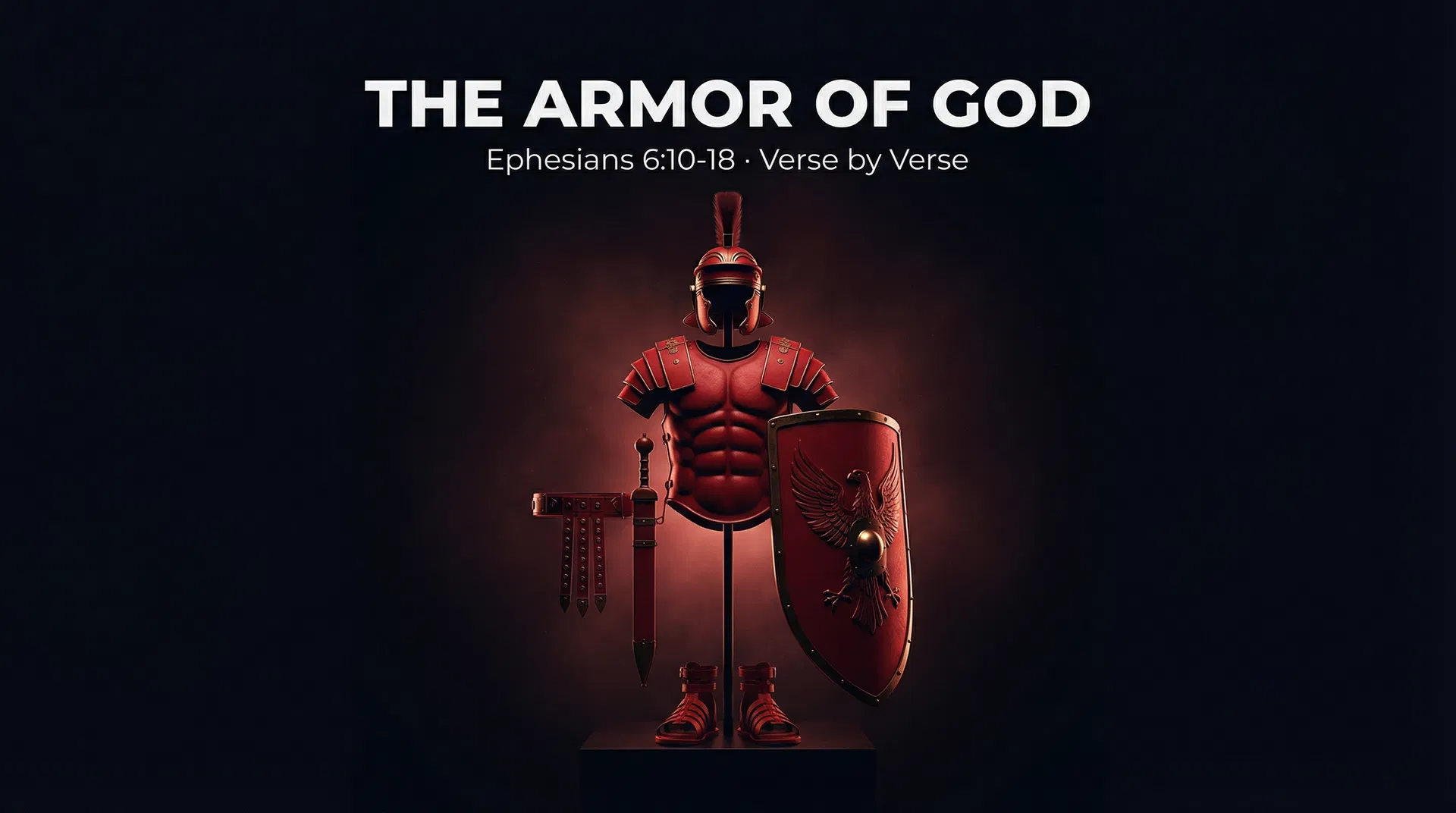
What Is The Armor of God? Ephesians 6 Explained
Paul's vivid metaphor of the Roman soldier's armor in Ephesians 6 provides a practical guide for spiritual warfare. This verse-by-verse study examines the Greek behind each piece — from the belt of truth to the sword of the Spirit.
If you have ever felt overwhelmed by the pressures of life — temptation, doubt, fear, or spiritual discouragement — you are not alone. The Apostle Paul understood that the Christian life involves a real spiritual battle, and he addressed it directly in one of the most vivid passages in all of Scripture. In Ephesians 6:10–18, Paul describes the "whole armor of God," a powerful metaphor drawn from the equipment of a Roman soldier. This passage is not merely a poetic image; it is a practical guide for every believer who wants to stand firm in faith. In this verse-by-verse study, we will examine each piece of the armor, explore the original Greek language, and discover how to apply these truths to daily life.
The Context: Why Paul Wrote About Spiritual Warfare
Before examining the armor itself, it helps to understand the historical setting. Paul wrote the letter to the Ephesians while under house arrest in Rome, likely between AD 60 and 62. Chained to Roman guards day and night, he had a front-row view of a soldier's equipment — and he used that imagery to teach a profound spiritual lesson. The city of Ephesus was a major commercial hub in Asia Minor (modern-day Turkey) and a center of pagan worship, particularly of the goddess Artemis. The believers there faced intense spiritual opposition, and Paul wanted them to know that God had provided everything they needed to stand firm.
"Finally, be strong in the Lord and in the strength of his might. Put on the whole armor of God, that you may be able to stand against the schemes of the devil." — Ephesians 6:10–11 (ESV)
The Greek word for "whole armor" is panoplia (πανοπλία), which referred to the complete offensive and defensive equipment of a Roman foot soldier. The historian Polybius described this as including a shield, sword, javelins, helmet, greaves, and breastplate. Paul's point is clear: God provides everything needed for the battle, but the believer must put on the full set — not just the pieces that feel comfortable.
The word "schemes" translates the Greek methodeia (μεθοδεία), from which we get the English word "method." It implies cunning, calculated tactics rather than brute-force attacks. The devil does not always come with obvious temptation; he often works through subtle deception, discouragement, and division.
"For we do not wrestle against flesh and blood, but against the rulers, against the authorities, against the cosmic powers over this present darkness, against the spiritual forces of evil in the heavenly places." — Ephesians 6:12 (ESV)
Paul makes clear that the real battle is not against other people. The Greek word for "wrestle" (pale, πάλη) describes hand-to-hand combat — this is close, personal, and intense. Understanding the nature of the enemy is the first step in knowing how to fight. If you find this kind of verse-by-verse Bible study [blocked] helpful, you are already on the right path to deeper understanding.
The Belt of Truth and the Breastplate of Righteousness
"Stand therefore, having fastened on the belt of truth, and having put on the breastplate of righteousness." — Ephesians 6:14 (ESV)
The Roman soldier's belt was the foundation of his entire outfit. It gathered his tunic so he could move freely, and it held his sword in place. Without the belt, nothing else functioned properly. In the same way, truth — both doctrinal truth and personal integrity — is the foundation of the Christian's spiritual life. The Greek word aletheia (ἀλήθεια) encompasses both God's revealed truth in Scripture and the believer's commitment to living honestly. When we compromise on truth, every other piece of armor becomes unstable.
The breastplate of righteousness protected the soldier's vital organs — his heart and lungs. The Greek word dikaiosyne (δικαιοσύνη) refers both to the righteousness imputed to us through faith in Christ and to the righteous conduct that flows from that relationship. This is not self-righteousness; it is the righteousness of Christ credited to the believer (2 Corinthians 5:21) and lived out in daily obedience. When guilt and accusation come, the breastplate reminds us that our standing before God is secure.
If you find this kind of verse-by-verse commentary helpful, BibleCompass provides AI-powered commentary for every passage in the Bible. Try it free →
The Shoes of the Gospel and the Shield of Faith
"And, as shoes for your feet, having put on the readiness given by the gospel of peace." — Ephesians 6:15 (ESV)
Roman soldiers wore caligae — heavy, hobnailed sandals designed for long marches and sure footing on any terrain. The "readiness" (Greek: hetoimasia, ἑτοιμασία) given by the gospel of peace means that believers are always prepared — prepared to stand firm, prepared to advance, and prepared to share the good news. The gospel is described as a gospel "of peace" because it reconciles us to God and gives us inner stability even in the midst of conflict.
"In all circumstances take up the shield of faith, with which you can extinguish all the flaming darts of the evil one." — Ephesians 6:16 (ESV)
The shield Paul describes is the thureos (θυρεός), a large, door-shaped shield that could cover the entire body. Roman soldiers soaked these shields in water before battle so that flaming arrows would be extinguished on contact. The Greek word pistis (πίστις) for "faith" here refers to active, trusting reliance on God's promises. When doubts, fears, and temptations come like flaming arrows, faith in God's Word and character is what quenches them. This is not passive belief; it is the deliberate choice to trust God's promises over the enemy's lies.
The Helmet of Salvation and the Sword of the Spirit
"And take the helmet of salvation, and the sword of the Spirit, which is the word of God." — Ephesians 6:17 (ESV)
The helmet protected the soldier's head — the seat of thought and decision-making. The Greek word soteria (σωτηρία) for "salvation" encompasses past, present, and future deliverance. Wearing the helmet of salvation means guarding your mind with the assurance that you belong to God, that He is working in you now, and that He will bring you safely to glory. When despair or confusion attacks your thinking, the helmet reminds you of the hope you have in Christ.
The sword of the Spirit is the only offensive weapon in the armor. The Greek word machaira (μάχαιρα) refers to a short, double-edged sword used for close combat — precise and effective. Paul identifies this sword as "the word of God," using the Greek word rhema (ῥῆμα), which often refers to a specific, spoken word rather than Scripture in general (logos). This suggests the active, specific application of Scripture to particular situations — exactly what Jesus did when He resisted Satan's temptations in the wilderness by quoting specific passages (Matthew 4:1–11). Knowing Scripture is essential, but wielding it in the moment of battle is what makes it a weapon. A structured reading plan [blocked] is one of the best ways to build this kind of familiarity with God's Word.
Prayer: The Power Behind the Armor
"Praying at all times in the Spirit, with all prayer and supplication. To that end, keep alert with all perseverance, making supplication for all the saints." — Ephesians 6:18 (ESV)
Though not a piece of armor itself, prayer is the atmosphere in which the armor functions. Paul uses the word "all" four times in this single verse — all times, all prayer, all perseverance, all the saints — emphasizing that prayer should be comprehensive and constant. The phrase "in the Spirit" indicates that effective spiritual warfare prayer is empowered and guided by the Holy Spirit, not merely recited from habit. Prayer connects every piece of the armor to the God who supplies it.
How to Put On the Armor of God Today
Applying the armor of God is not a mystical ritual; it is a daily, practical discipline. Begin each morning by grounding yourself in truth — read a passage of Scripture and ask God to align your thinking with His Word. This is how you study the Bible effectively [blocked] and build the foundation of truth and righteousness. When anxiety or temptation strikes during the day, consciously take up the shield of faith by reciting a specific promise from Scripture. Write Ephesians 6:16 on a card and place it where you will see it each morning as a reminder that God's promises are your defense.
Make prayer a constant conversation rather than a scheduled event. Ask the Holy Spirit to alert you to the enemy's tactics — the subtle lies, the creeping discouragement, the relational conflicts that erode unity. And remember: the armor is not something you manufacture. It is provided by God. Your role is to put it on by faith and to stand.
Explore Ephesians with Verse-by-Verse Commentary
If you found these commentaries on the Armor of God helpful, BibleCompass provides this kind of verse-by-verse AI commentary for every passage in the Bible — including the entire book of Ephesians. You can start a personalized reading plan, explore cross-references that connect Ephesians to the rest of Scripture, and build a daily study habit — all completely free. Try BibleCompass today →
Recommended Reading
Deepen your study with these hand-picked books related to this article.
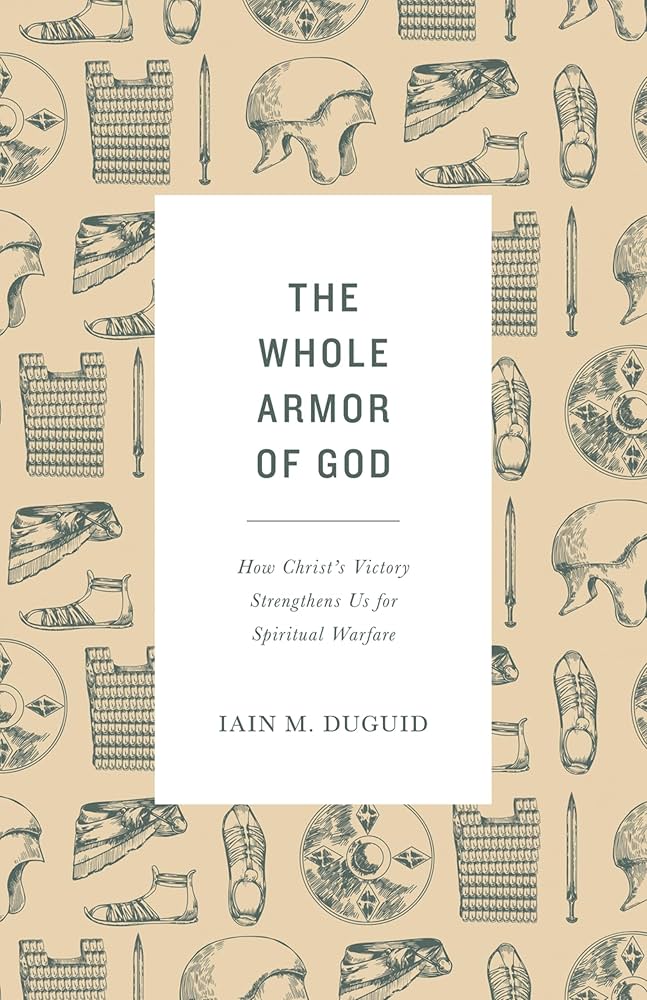
The Whole Armor of God
Iain M. Duguid
Unpacks each piece of spiritual armor Paul describes in Ephesians 6, inviting believers to take up the armor each day in Christ's victory.

Be Rich (Ephesians)
Warren W. Wiersbe
Verse-by-verse Ephesians commentary revealing the countercultural nature of the Gospel and the riches believers already possess.
How to Read the Bible for All Its Worth
Gordon D. Fee & Douglas Stuart
The definitive guide to reading, interpreting, and applying the Bible across every genre — narrative, poetry, prophecy, epistles, and more. Essential for beginners and seasoned students alike.
As an Amazon Associate, BibleCompass earns from qualifying purchases.
Get Free Daily Verses
AI-powered commentary delivered to your inbox every morning
Related Articles

Best Bible Reading Plans for Beginners
Starting the Bible can feel overwhelming with 66 books and over 31,000 verses. These reading plans give you a clear path to build a consistent, rewarding study habit.

Understanding Cross-References in the Bible
Cross-references are the threads that weave the Bible together. Understanding how to use them transforms your reading from surface-level to deeply interconnected.

KJV vs ESV vs NIV: Which Bible Translation Should You Read?
With dozens of English Bible translations available, choosing the right one matters. This guide compares the five most popular translations to help you decide.
Community Discussion
(0)Sign in to join the discussion.
No comments yet. Be the first to share your thoughts!